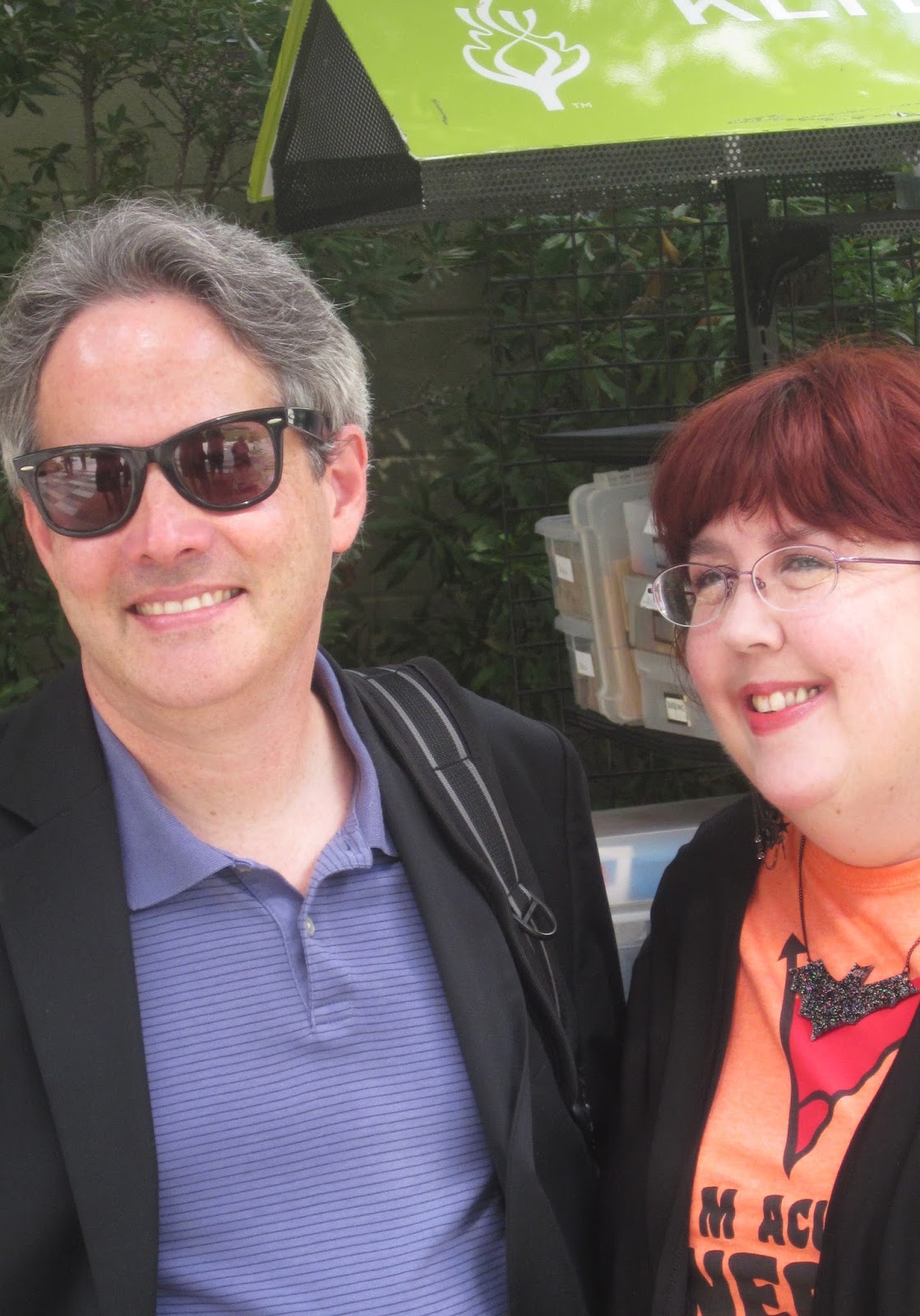
Showing posts with label Joy Tipping. Show all posts

Tuesday, January 3, 2017

Help! How do I find reviewers for my book?

At every writers’ group (and I belong to several), I hear the lament – where to find reviewers for our books? With the rapid disappearance of print media, traditional venues for book reviews are disappearing faster than ice in the Arctic.

Not quite two years ago I blogged about reviews published in my local newspaper, The Dallas Morning News. The bad news, said DMN staff writer Joy Tipping (who has since left the paper), is that the chances of getting a book reviewed in a big circulation newspaper like Dallas’s are also vanishingly small. The paper receives between 300 and 600 books weekly from authors hoping for recognition. How many reviews does it publish out of those hundreds? Perhaps only six to eight in a week.

Writers of independently-published books need not apply. Neither, in most cases, should those whose books were first published in paperback format. That said, preference goes to books by local authors, with local settings, or at least to Texas authors of books about Texas.

image: wikimedia commons
And the “Neighbors Go” community section of the paper? It's now defunct.

But when it’s tough to get paper reviews, tough writers don’t cry. They turn to cyberspace.

Besides Tipping’s list of book review sites (see “To get your book reviewed, take Tipping’s tips,” February 3, 2014, at this site), I found still more sites with review-hungry readers more recently, courtesy of author/blogger Maria Murnane’s “Marketing tip: connect with book bloggers” at She Writes. And you don’t have to be female to subscribe to She Writes, which also has tips for connecting book bloggers to authors and publishers. 

Besides listing “100 Best Blogs for Book Reviews” Murnane suggests contacting bloggers with a personalized email explaining why you think your book is a great fit for their site. (Think the kind of email you’d send an agent you’re querying about book representation.) Also, ask if a blogger who reviews your book will also post on Amazon (and I’ll add, Goodreads). I do, routinely.

Yes, you will need an Amazon account to post reviews there, but you don’t necessarily have to buy the book itself from Amazon. (See last Tuesday’s post, “This year’s resolution: read, review, repeat,” for information about reviewing on Amazon.)

And then, check out the bloggers those bloggers follow for even more possibilities. I’m listing the blogs I follow – including several who post reviews – on a separate page at this site.

One final caution before you hyperlink madly to Tipping’s or Murnane’s lists: blogs change. Several I checked are inactive if not outright dead. I’d post an updated list but it would probably be out of date before I finished writing this. Others, however, are more active than I could have imagined, with multiple reviewers, and/or reviewers who read hundreds of books yearly.

There are probably even more popping up as I type these final words. Find, share, write and review!

***
Does something look different here? That's because this site is undergoing a major update for 2017. Everything changes, and this isn't the first one for my blog since it debuted in August 2010 with a single post for the month that, I think, found fewer than a dozen readers. Tuesday postings will continue to be a given, as they have for the past several years under the former title "Wordcraft." And although I've ditched the Wordcraft name, the format will continue, including updates on current literary events, with an emphasis on those in my North Texas region, as well as more -- lots more! -- reviews of books both current and classic.

The previous Adventure classics posts that appeared on Fridays saw their final postings in December 2016. Those older posts are still available in the archives, as are the Totally Texas posts of still earlier years, that highlighted kid-friend outings in the state.

So, is there any point in visiting this site now on days other than Tuesday?

Definitely! I'll continue to post during the week as events occur and as I review books. The new, more flexible schedule will let me post more immediately -- and more frequently about literary events, writing advice, contests, and anything else that doesn't fit in Tuesday's slot.

Wishing everybody a year of more reading -- and writing -- in 2017!

Tuesday, June 14, 2016

Wordcraft – Cronin’s journey through apocalypse & back

The City of Mirrors
by Justin Cronin
***
Is it any wonder Justin Cronin seemed like a man released from a long incarceration when he appeared last Friday night at the Dallas Museum of Art to discuss the release of the last book of his Passages trilogy, The City of Mirrors, with local book reviewer Joy Tipping? "I basically spent the last 10 years locked in a room," Cronin said, finishing what he termed the "2,000-page novel" that his three apocalyptic volumes -- The Passage, The Twelve, and The City of Mirrors comprise. 

“Does it have to be the last book?” Tipping asked, echoing the sentiments of the room full of fans, many of whom have followed him since the release of the first book in 2010.

“Yes, it does,” he said. Not that seeing publication of the final book of the series about a race of medically-induced vampires, the havoc they unleash on the world, and that world’s ultimate redemption (or not – no spoilers here) necessarily means the end of that world’s story.

“At some point, I think I’m going to write a book of stories associated with the narrative. In fact, I’m writing it now, very slowly, because my brain is dead right now,” he assured fans. Plus, there’s always the possibility of movies or, more to Cronin’s wish, TV series to look forward to.

In the meantime, the Distinguished Faculty Fellow at Houston’s Rice University had plenty to say about the trilogy’s Texas influences, the joys of writing genre fiction, and, yes, the thing he has for red-haired heroines. He didn’t start out as a writer of books garnering not only critical and popular acclaim but what were rumored to be multi-million dollar advances. After writing the  very literary, very grownup award-winning Mary and O’Neil and The Summer Guest in the early 2000’s, his daughter Iris, then in the third grade, dared him to write the book she wanted to read. One that should be about a girl who saved the world. And it had to have a character with red hair, “because she’s a redhead.”

Although he was currently writing another book, Cronin and his daughter passed stories about this world-saving, red-haired girl back and forth. When he typed his notes, it came to 30 single-spaced pages that “wow – looked a lot better than the thing I was writing…my agent and I sent it out under a pseudonym because it was so different.”

Different as in “genre” instead of his previous “literary” fiction.

“I don’t think genre is a bad term,” he told Tipping. “But there is a difference between work that is constructed mainly to entertain and a book meant to endure. The difference is in the depth of characters.” Such depth that he feels confident about filling that other volume he spoke about with the stories he developed around the characters, stories there simply wasn’t room for in the trilogy. And there are plenty of those, with the appendix to The City of Mirrors listing more than 60 named characters.

And how about those "really long books in which which a lot of people die," as Cronin described  his trilogy? "I read that Larry McMurtry was a big influence on you,” Tipping said.

Texas author Larry McMurtry’s magnum opus, Lonesome Dove, was a great influence, Cronin agreed. Schooled in the classic Iowa Writers Workshop format of short stories – “miniature works of despair,” as Cronin described them, McMurtry’s book about a massive 19th century cattle drive and its correspondingly enormous cast of characters was a revelation.

On a plane trip, he met a Texan “blathering about this book,” who insisted on forcing it on him. “I read (it) on the plane, then lay in a hotel room for three days (still) reading it. I saw the virtues and the power of a really huge story.”

As well as the revelation that “a book could fall within an established genre and still be a wonderful book."

Tuesday, February 24, 2015

Wordcraft -- Writing’s little hacks: the double dip

Who hasn’t wished at some point wished she could be in more than one place at a time? Or grab an extra scoop of ice cream without doubling the calories? Or maybe get two sales for the cost of writing only one story, like British blogger Deborah Walker, http://deborahwalkersbibliography.blogspot.com/, who recorded an amazing 179 sales last year.

How did she do it? First, of course, by writing a lot and submitting a lot. But she notes that about half of those 179 sales were reprints. Yes, she’s learned to double dip on her sales by tapping the market for reprints. (And by marketing to foreign language venues, but more about that in a minute.)

I’m far from being as prolific as Deborah, but I’ve learned to love the reprint market. Reprints don’t always pay as well as markets for previously unpublished work, but they offer a chance to get our work in front of the eyes of new readers, or in new media. (Audio publications in general love reprints!) And don’t tell anybody, but sometimes I’ve even sold reprints for more than I got from the original sale.

Check your contracts to be sure you have the right to sell your story again. Typically, all rights (except first English-language or first North American publication) will revert to the writer within six months to a year.

Find those reprint markets the same way as markets for original work, online. I love to hear from readers about their favorite search sites. Mine include The (Submission) Grinder, http://thegrinder.diabolicalplots.com/ (free); Ralan, http://ralan.com/ (free); or Duotrope’s Digest, www.duotrope.com/, (by subscription, but consider checking out is first-month-free offer), where I set the search parameters for “accepts reprints”.

And about those foreign language markets Deborah uses? Canadian speculative fiction writer Douglas Smith maintains a list of non-English markets at his site, www.smithwriter.com/foreign_market_list.htm/.

How else to double dip? After long resisting the lure of Pinterest,
www.pinterest.com/, I realized it’s a great second venue for the photos I take for my blog posts. There’s no pay, but it taps a different set of potential readers.

Another double dip comes from book reviews. Recently, I wanted to help my friend, Kathleen M. Rodgers, whose new novel, Johnnie Come Lately, was published this month, and realized I could post virtually the same review I’d posted at this blog on Goodreads, www.goodreads.com/; and Amazon, www.amazon.com/. I stumbled around those sites a little before getting comfortable with their formats, but a couple of postings, I feel like an old hand. Again, its multiple places for people to read about Kathleen’s book and see a sample of my writing as well, at a single swoop.

Ardent reviewers and review readers will want to see Dallas Morning News writer Joy Tipping’s list of book review sites and blogs, “To get your book reviewed, take Tipping’s tips.” at this site. And for anybody who loves getting those free review copies, the Dallas-area Fresh Fiction organization is advertising for reviewers. For information, see http://freshfiction.com/.

And share all the ways you double dip as well!

Monday, October 13, 2014

Wordcraft -- What books do reviewers like best?

Merschel & Tipping
When I’m at the library, I always check out what’s on the carts waiting to be shelved. You know, the stuff other people read. So I was at Klyde Warren Park early last Thursday, joining several other book lovers. Because what we all wanted to hear was what Dallas Morning News book pages editor Michael Merschel and voracious reader/staff writer/reviewer Joy Tipping were reading.

“The Facebook game of the moment¾ or was it last moment? They go by so fast¾ has a nice literary twist,“ Merschel wrote in a recent column. “It asks you to fame five ot 10 books that meant something to you and then tag five friends and ask them to do the same.“

So it was, tag, Michael and Joy, and tell us about those five favorites for fall reading. And first, how they pick those favorites.

Given that the News receives approximately 300 books each week to review, picking five, even five with special appeal to Dallas readers, isn’t easy.

His first pick: Blood Aces by Doug Swanson, about Dallas gangster turned Las Vegas casino mogul Binny Binion. Merschel admitted the topic didn’t immediately appeal to him. But he read it and was hooked. “He get into a subject that history will never acknowledge ¼ Each time you think it can‘t get any more incredible, it does.”

Second pick: Merritt Tierce’s debut novel, Love Me Back, which Merschel describes as “Cormac McCarthy’s The Road, but set in a Dallas steakhouse.” Definitely now family friendly, he warned, but with a Dallas angle that may make readers think twice about which restaurant they choose: “the writer once worked in a steakhouse not far from here.”

And third pick? Walter Isaacson’s history of computers, The Innovators. Merschel’s only quibble about this¾ “he tells so many stories, I wished he’d focused on fewer.’ But when one story is about Etta Lovelace, the woman who invented the basis for computers in the 1840’s and the women who wrote the first computer programs in the 1940’s, who can pick which one to leave out?

At this point, Merschel relinquished the floor to Tipping. Or maybe Tipping just seized the chance to talk. Her first choice: another debut novel by a Dallas author, Minerva Koenig’s Nine Days. “I think this might replace the alphabet mysteries of Sue Grafton,” Tipping said, with its tale of a murder set in a tiny Texas town and an unlikely heroine close to her heart, “pushing forty, barely five feet tall, and round.”

Tipping’s second choice: “the funny and heartwarming” tale of sisters Iris and Ava, Lucky Us, by Amy Bloom.

Her third choice, for something completely different: David Quammen’s Spillover, now out in paperback, “about a virus coming out of the rainforest in Africa transfers to humans.”

Finally, considering that she’s a virulent fan of historical romance writer Diana Gabaldon, Tipping couldn’t resist a plug for Gabaldon’s Outlander series.

Which prompted Merschel to put in a final word for something again completely different, The Magician King, by Lev Grossman, last of his Magician trilogy. “It’s an allegory about his struggles with depression, but it’s funny and witty. I gave up reading fantasy books in about the 12th grade and this is the one that brought me back.”

And then, of course, there’s Merschel’s often-expressed admiration for YA author Judy Blume and her expression to readers that’s it’s “not about me. It’s about you, it’s about us. That’s the way I feel about the books coverage. It’s not Mike’s books, it’s not Joy’s books. It’s your book section.”

For more reviews from the Dallas Morning News, including many books mentioned in this post, see
www.dallasnews.com/entertainment/books/.

Monday, February 17, 2014

Wordcraft -- Adventure of a lifetime, lives of adventure

Just when it seemed there was nothing new in historical fiction, Nancy Horan invented a new subgenre--the remarkable woman behind the famous man, Dallas Morning News reviewer Joy Tipping has said. Horan began the invention with her first novel, Loving Frank, a fictionalized version of the early twentieth century love affair between Mamah Borthwick Cheney and Frank Lloyd Wright, both married--to other people.

Horan extracts gold from the form again with her second novel, Under the Wide and Starry Sky, about the unlikely love affair and marriage between Robert Louis Stevenson and Fanny Vandergrift Osbourne, American, nearly eleven years his senior and married to another at the beginning of their love affair.

Horan’s book, Tipping said, introducing her at last Tuesday’s Authors LIVE! Program, contains all her favorite requirements for a satisfying novel. “Feisty heroine, check. Adventure, check. Pirates (pause) Long John Silver, check.”

Stevenson was in his mid-twenties, yet to make a name for himself in literature, when he met Fanny. She had fled to Europe to study art, one of the few respectable ways, a friend assured her, to escape her chronically unfaithful husband, Samuel Osbourne. Fanny and Stevenson (known as Louis to family and friends) met at a boarding house in the French countryside frequented by writers and painters. Fanny was there seeking a rest cure after the death in Paris of her youngest child. Stevenson was there trying to avoid using the law degree he had recently received--at the elder Stevenson’s expense. Falling in love was the last thing either of them had in mind.

Fanny was pretty and petite, with curly dark hair and a face so youthful she was often mistaken for the sister of her daughter Belle (Isobel). Stevenson, as Horan told her audience, would declare that he first began to fall in love when he glimpsed her through a window of the boarding house, smoking a cigarette and chatting with his older cousin, another Robert Stevenson, known in the family as Bob. 
Fanny was initially less smitten by Stevenson, later described by her daughter as “nice-looking for an ugly man.” It’s a phrase so apt I suspect it came from one of Fanny’s letters. Although Horan disclaimed any intention of writing a biography, she read extensively from the letters and journals of Fanny and Stevenson, using many of their own words for the dialogue of Under the Wide and Starry Sky.

At last, although finding herself drawn more and more to Stevenson, Fanny made a final attempt at reconciliation with her husband in California, leaving Stevenson in agony over their relationship.

“Fanny had gone back and gotten lost in her old life, Horan writes, delineating Stevenson’s dilemma. “She had made a bad choice in Sam Osbourne. Might she make a mistake again. . . Then a telegram came from California. Louis. I’m lost and sick. Need you.

Stevenson set off by ship and train halfway around the world to find her. The journey so damaged his already fragile health that, fearing he might die on the trip, he wrote the poem that would be used as his epitaph when he was laid to rest at last on a hilltop in Samoa: “Under the wide and starry sky.” It was the beginning of the adventure of a lifetime.

Some of Stevenson’s friends would see Fanny’s concern for his health as an attempt to estrange them from the increasingly famous writer of Treasure Island (written for Fanny’s son Samuel Lloyd Osbourne, and featuring inimitable villain Long John Silver), The Strange Case of Dr. Jekyll and Mr. Hyde, Kidnapped, The Black Arrow, and others. But Stevenson never wavered in his respect for Fanny, terming her his “critic on the hearth” who brought out the best from his writing.

Read more about Nancy Horan, her books and events, at
www.nancyhoran.com/.

For more about Stevenson’s life and writing at this site, see “A flight through the heather,” September 23, 2011, and “A book made from a map,” August 29, 2012. And stay tuned for a discussion of “Dr. Jekyll and Mr. Hyde,” October 15, 2014.

#

The DFW Writers Conference has extended its Celebrating the Classics: query contest until February 28. If you’re still unsure about which classic to choose, try one of Stevenson’s. For details and prizes, see “Celebrating the Classics” Query Contest--Held Over, at http://dfwcon.org/.

Monday, February 10, 2014

Wordcraft -- Raising your book above the crowd

The bad news, Dallas Morning News writer Joy Tipping told this month’s meeting of the local Mystery Writers of America, is that a writer’s chances of getting publicity for her novel through reviews is vanishingly small.

The good news is that there is a far better method than reviews for raising awareness about our books. Last week I wrote about the many ways of getting reviews. This week it’s how to get the word out without reviews. And it doesn’t require bundles of bucks for full page ads in the New York Times Review of Books.

In preparation for the day my Great American Novel (currently in version about 4.0) gets published, heaven only knows how many books, blogs, websites, you name its, I’ve read or had recommended to me about how to promote a book. I hate them. I hate the gimmicks. Just reading about them makes me tired.

Gimmicks, in Tipping’s opinion, aren’t the point. The way of attracting readers to our books is through simple word of mouth, the most ancient form of networking.

Last Monday I wrote that Tipping told writers not to pin their hopes on getting reviewed in big newspapers. Today I’ll tell you she says, “don’t pin your hopes on reviews in any publication.” Instead, get the word out about your writing in social media. “I want you to get rid of the word ‘reviews’. . . Get people to comment on Facebook posts. Or ask them to write min-reviews on Facebook. It really is all about knowing people.”

And if socializing by introverts sounds contradictory, the answer, thanks to the Internet is that it doesn’t have to be.

“In high school I was really shy,” Tipping says. “If you’d told me my career would be
networking with people, I’d have crawled under the table.” (She says she’s now gotten over her shyness.)

“Social media is where it’s at,” Tipping says. “I send two to three hours of every day blogging, on Twitter, Instagram, Facebook, and so on.” (She also uses Google + and Pinterest). “It’s so important that you have those accounts--that’s your platform.”

Don’t have a book to offer yet? “Start putting your opinions on Twitter when you start writing your novel, and when you finish your book, you can tweet about it.”

For those of us still feeing too private to put opinions out on the Internet for the whole world to see, let me just say I’m always amazed by the number of writers who show up in workshops proclaiming themselves too shy to divulge their writing to outsiders. Yet they yearn to become bestselling authors. It’s as if we don’t understand that selling books means displaying our opinions for the whole world.

Oh, and give back. In her discussion of reviews (yes, I know you’re still interested in them), she told us one of the best ways to get reviewed was to write reviews of others. The same degree of support for others, I believe, applies to networking. I see more
“likes” on Facebook for writer friends who promote other friends’ writings than for those who only promote themselves.

Although Tipping advocates treating social media as our personal cable channel, she cautions that we need to treat it as we would a broadcast.  "Don’t tweet anything you wouldn’t want to see on the CNN news crawl.”

And no matter what your Facebook privacy settings are, there is nothing, she warns, that her twenty-something year old son couldn’t hack in minutes. “There is nothing on social media that is private.”

She also cautions users to consider the differences between various social media audiences. “Don’t set your Facebook settings to send everything to Twitter. They’re completely different platforms, completely different readers.”

And for more about Tipping, her books (yes, she’s written travel books), and opinions, see
twitter.com/JoyTipping/.

Monday, February 3, 2014

Wordcraft -- To get your book reviewed, take Tipping’s tips

Joy Tipping
“I have the best job in the world,” Joy Tipping tells Saturday’s meeting of the Mystery Writers of America’s Southwest-Dallas chapter. As the woman who’s written, by a by-line count, six hundred reviews, she’s arrived to tell a roomful of writers how to get the word out about their books. And, surprise--it’s not always by getting a review in a major newspaper.

The bad news, she says, is that chances of getting reviews in a newspaper with the circulation of the Dallas Morning News are vanishingly small. The News receives between 300 and 600 books weekly. From those, it publishes only six to eight full-length reviews each week..

“We give preference to local authors, local settings, Texas authors and Texas books,” Tipping says.

It won’t consider reviewing self-published books, “although,” Tipping says, “I think at some point we're going to have to revisit that policy. That doesn't mean we can't do a feature story about an author.” The News also doesn’t usually review books first published in paperback, although it sometimes makes exceptions for exceptional books.

The good news, though, is that there are more ways than ever of getting reviews in less traditional venues.


Her mantra for anyone seeking publicity is to think local, research newspapers in your region at www.listofnewspapers.com/. 

If your hometown is Dallas, contact the News Neighbors Go community sections, community@neighborsgo.com/, “a great place for feature stories.” Other avenues interested in local writers include Chamber of Commerce publications, alumni newsletters and magazines, society publications, and magazines aimed at particular genres of writing or reading.

And, she says, don’t overlook independent book reviewers, such as the nearly 325 listed in www.theindieview.com/.  (Just when I think I've checked everything, I find something I haven't.  This site was originally reported as "indie review," not "indie view," which is indeed up and running.)


And check book review blogs. Her choices out of the hundreds available on the Internet are:
http://101books.net
http://bookslut.com
http://bookaliciousbabe.blogspot.com 
http://deliberatereader.com
http://bookfetish.org
http://whimpulsive.net/.

For book blogs specializing in mysteries and thrillers, she likes:
http://bookgasm.com
http://drowningmachine.blogspot.com
http://kittlingbooks.com
http://jensbookthoughts.com/.

With so many choices, “how do you find a book reviewer that has your specialty and really gets you?” she asks. “Read reviews” to learn the reviewers preferences. (She admits preferring contemporary and historical fiction by women writers, thrillers and horror.)

Once you’re ready to approach potential reviewers, she recommends making first contact by email, with a good subject line that mentions what you’re seeking, and any local or other connection to distinguish it from the dozens (or hundreds) of other emails the reviewer gets daily.

Even if you get turned down for a full length review, ask the publication if it will consider a mini review on its own blog, Tipping says.

And even more important for writers than reviews, Tipping says, is social media. Next Monday, her suggestions for harnessing its potential--and avoiding its pitfalls.


Wednesday, November 9, 2011

Wordcraft -- Get your NaNoWriMo on

I was chatting with a fellow Dallas Writers Garret member during the intermission in last week’s Orchestra of New Spain concert when the subject of NaNoWriMo came up. That’s pronounced “nan-oh-rye-mo”, short for National Novel Writing Month, although it’s now gone international. It’s an organized effort to get people to commit to writing 50,000 words of their novels during the month of November.

Mandy looked sympathetic when I confessed I hadn’t even signed up at NaNoWriMo’s official website . “You’re only four days late,” she said.

As I write this, I’m getting even later.


(Mandy will also blog about NaNoWriMo on November 10, at http://ordinaryaddictions.wordpress.com/)


Gimmicky though it sounds, NaNoWriMo gives a lot of us the incentive to get busy with that book we’ve always meant to write. Or the next one, or the one after the next one. Whining all the way about other commitments (I was cleaning out an old family house for sale), even I managed to add more than 10,000 words on my novel in progress last year.

The official website is
www.nanowrimo.org/ ,where the highly competitive can also log in their daily word counts.

The whole point of NaNoWriMo is to turn off your inner editor -- the voice saying you must correct all the misspellings, the lapses in logic, the bad grammar and punctuation -- before you can move forward. The NaNoWriMo attitude is, just let go and write. Editing’s what the other eleven months of the year are for.

But if you need help getting started, check out www.io9.com/581467/the-7-types-of-short-story-openings/. The site titles these as openings for short fiction, but there’s no reason you can’t use them to start a longer piece as well.

I’m always skeptical of writers who claim not to have any plan for their books. My own experience from previously writing apparently without plan is that I at least knew who my characters were and had some idea of what would happen in the story’s course. (I always look for places and ways to blow things up.) But once past the basic idea of your novel, if you need help with structure, consider Kristen Lamb’s blog,
www.warriorwriter.wordpress/. Of course, I’ve blogged about structure, scene, and characters, but Kristen’s put it all in a connected series. Tell her I sent you!

(Next Wednesday -- Hear what Stephen King has to say about his newest book, “11/22/63,” hailed by Dallas Morning News writer Joy Tipping as “Stephen King’s Great American Novel”. At this writing, some tickets were still available for King’s appearance Thursday, November 10, at www.showclix.com/)