Showing posts with label NaNoWriMo. Show all posts

Wednesday, October 20, 2021

Weird & wonderful fall writing contests and events

(Updated November 15 with information about DL Hammons' WRiTE CLUB contest.)

How long has it been since I posted about writing contests? Well, that's too long! Here's a sampling, both wonderful and weird, to whet your writing appetite. The good news -- they're all virtual!

First -- WRiTE CLUB, DL Hammons' popular reader's choice contest, has officially kicked off for 2021. Submissions accepted November 15-28. It's fun! It's Free It's got great prizes. See DL's site  for details.

Now-October 26: The Writers Guild of Texas annual flash fiction contest offers cash prizes to the top four stories. Entries must be 300-1000 words, original, and not previously published. No poetry, essays or fan fiction. See the guidelines for additional requirements. First entry fee for nonmembers is $35, which includes a complimentary WGT membership through December of the following year, $15 each for additional entries (maximum of three). WGT members may submit one entry at no additional cost. Additional submissions cost $15 per entry. See the site for additional guidelines.

Now-November 15: Carve Magazine's Prose & Poetry Contest 2021 offers cash prizes and publication for winners in fiction, nonfiction, and poetry. Writers may submit multiple entries, with maximum wordcounts of 10,000 for prose, 2,000 for poetry. Stories (literary only -- no genre fiction) essays, and poems must be previously unpublished (including on-line publication). Entry fee: $17. No mailed submissions. See the site for full details.

Image: Ryan McGuire for Pixabay
December 2: Twitter's quarterly pitch your book by tweet event, #PitMad (brought by Pitch Wars) tempts literary agents and acquisition editors to request manuscripts by "liking" the authors' 280-character pitches. Open to all unagented writers working in all genres. Work must be completed and polished but unagented. Include the #PitMad hashtag and an age sub-hashtag. Writers may also include multiple genre or additional hashtags and may multiple manuscripts. Just don't pitch more than three times for any single work during the day. Not yet ready to query? No fear -- #PitMad repeats quarterly, starting again March 2022. See the Pitch Wars site for details.

Now-December 31: L. Ron Hubbard's Writers of the Future contest is for new and amateur writers of science fiction and fantasy. Repeats quarterly. Cash prizes for first through third-place, with each quarter's first place winners competing for an additional annual prize. Original works only, not previously published in professional media, up to 17,000 words. No entry fee. See the site for details.

Want more? Need more? Of course! So check out Arthur Klepchukov's Writing Contests Worth Your Time and Erica Verrillo's Publishing and Other Forms of Insanity blog. And don't forget Reedsy's list of contests as well as Ralan.com!

***

Then there are the writing/literary conferences. Pandemic protocols moved many of what were normally spring and summer events into late autumn, even early winter, so there's till time to catch some old favorites and make new ones.

October 25-28, 30-31: The Texas Book Festival opted for a hybrid formal. October 25-28 events are virtual, those 30-31 in-person at outdoor venues in Austin, Texas. Free as always, but check the site for details.

November 1-30: Maybe NaNoWriMo (short for National Novel Writing Month) isn't exactly a conference. But this self-described seat-of-your-pants creative writing event has gone world-wide. Start a book, make friends virtually or in-person, and give yourself an excuse to let someone else roast the Thanksgiving turkey!

November 4-7: The World Fantasy Convention goes bravely hybrid -- live from Montreal, Canada, or in your living room. Many details still to be hashed out, so see the site and remember to check COVID-19 protocols for international travel.

November 5-6: New to me is the Fiction Intensive Virtual Writing Conference, taught by the likes of of Steven James, Donald Maass, Tosca Lee, and more authors, agents, and editors. As always, see the site for registration and complete details.

November 18-20: The RWA Conference (Romance Writers of America) opted for full-on virtual. Check the site for details and registration.

December 15-17: Finally on my list of major literary conferences is WorldCon, the international science fiction event, to be held in Washington, D.C. Stay tuned to the site for details.

As we near the end of 2021, look ahead. Some 2022 events are staying virtual -- which means less expensive. Events like Donald Maass's BONI (Breakout Novel Intensive), going virtual June 13-19, 2022; and Breakout Novel Graduate Learning Retreat January 17-23, 2022. And yes, there are in-person versions of both. See the Free Expressions site for details.

(Post updated to include Writers Guild of Texas flash fiction contest)

Tuesday, November 12, 2019

It’s NaNoWriMo! Has your novel taken off?

If you’re like me, you still, nearly halfway through November, haven’t announced your new novel project to NaNoWriMo. (Don't judge me – I haven't even eaten all the leftover Halloween candy yet!) If you're not like me, you're a gazillion words into that new novel project. Either that or you're wondering what the heck NaNoWriMo is.  

To get the easy part out of the way, NaNoWriMo is the catchy acronym for "National Novel Writing Month" – otherwise known as "November." It’s a 501(c)(3) nonprofit organization formed to help people find their voices, achieve creative goals, and build new worlds — on and off the page.

The project has grown far beyond the “national” part of its name since its inception in 1999. It yearly draws hundreds of thousands of writers from around the world who challenge themselves to pound out its goal of 50,000 words of fiction. Gimmicky though it sounds, NaNoWriMo gives a lot of us the incentive to get busy with that book we’ve always meant to write. Or the next one, or the one after the next one. 

We can write alone or in company with digital pals, obsessively posting and tracking our word goals. And local NaNoWriMo groups, like the DFW Rhinos of my North Texas locale, hold get-togethers where groups can tippy-tap-tap those keyboards in total silence for hours (between scarfing down snacks) without feeling like dweebs. (OK, we are dweebs, but we're a pack of dweebs! Hear us roar!)

image: pixabay
The point of NaNoWriMo is to turn off your inner editor. Right that inner voice saying you must correct all the misspellings, the lapses in logic, the bad grammar and punctuation -- before you can move forward. The NaNoWriMo attitude is, just let go and write. Editing's what the other eleven months of the year are for.

Still haven't clicked over to the NaNoWriMo page? Do it now, check out some of the pep talks from super writers, find yourself a local group, and announce your project. Hey, I did, right in the middle of typing this! And found a super picture for a cover, from one of my favorite copyright-free sites, Pixabay.

Now, not to put the brakes on, but let me point out that even 50,000 passionate words do not a novel make. They're a first draft – a very rough draft because remember, you're not polishing them. Yet. There's no time for polish in November.

That’s for January and February, what NaNoWriMo calls the “what now?” months. Luckily, as the NaNo project has grown, so have its resources. There will be webinars, discussions, writing camps, all free. (Not that NaNo doesn’t love support – drop a donation or check out the merchandise options.) And pat yourself on the back, because you're a writer!

Tuesday, December 18, 2018

Weather frightful? Online classes & contests still delightful!

‘Tis the season – for ice, snow and crazy holiday traffic. Never mind, there’s plenty for writers to do during these wintry days. Instead of fighting the weather, try a sampling of contests – not to mention craft-sharpening online classes. (And wouldn’t they make great gifts for the fellow writers on your ‘nice’ list. . . )

I’ll start with contests, because they’re coming up as fast as blizzards on the prairie.
From Writer Unboxed blogger Arthur Klepchukov, check out the winter 2018 version of “Fiction Writing Contests Worth Your Time.” (Worried that 2018’s fast coming up in the rearview mirror? Klepchukov kindly includes contests through February 28, 2019.)
Yes, I’m behind on some of these (see my December 8 post for excuses), but these are currently open: Nowhere – Fall 2018 Travel Writing Contest, with a December 31, 2018, deadline. Fee: $20, cash prize and publication. International writers welcome! See the site for details.
Before Columbus Foundation – American Book Awards. No cash, but a chance to support a noble, inclusive cause. No fee, but you’ll have to submit two copies of the book to the foundation by December 31, so make tracks for the post office! See the site for details.
Boulevard – Short Fiction Contest for Emerging Writers, $16 entry fee, cash prize and publication in a prestigious journal. (And did I mention it’s emerging writer-friendly?)
And – final on Klepchukov’s list for December 31 – River Styx – 2019 Microfiction Contest. Entry fee: $10-$20, publication and cash awards.
mage: pixabay
Want more? Keep reading down Klepchukov’s list for January and February! Or take a look at these listings from New Pages including:   Tartt First Fiction Award for writers who have not yet published a full story collection. Deadline: December 31, 2018. Entry fee: $20. See the site for details.
StoryQuarterly Nonfiction Contest, with a January 12, 2019, deadline. Cash prize and publication. See the site for entry fee.
2019 Colorado Prize for Poetry, for book-length collections of poems. Cash and book publication. Reading fee $25 (plus $3 for online submissions). Due date: January 14, 2019.
Also from New Pages – Rattle Chapbook Prize, Palette Poetry Spotlight Award, Kenyon Review Inaugural Short Nonfiction Contest, and more. See the New Pages site for details.
Oh, you say, you’re more of a genre writer? Check out the contest listings at Ralan.com for horror, science fiction, fantasy and mystery.
Or the previously mentioned, but still open manuscript and book contests from the Writers’League of Texas for works in a variety of genres. There’s a January 31, 2019, deadline for the manuscript contest, which doesn’t even require a completed manuscript, only the first 10 (or so) pages plus a synopsis, and offers a chance to win entry to the League’s 2019 Agents and Editors Conference. Entry fee for the manuscript contest is $55 for WLT members, $65 for nonmembers (includes written critique). Or opt to skip the critique and pay only $25 for members, $35 for nonmembers. WLT’s book contest (for books published in 2018) closes February 28, 2019. See the site for rules for both book and manuscript contests.
And, sharpen your writing skills with online classes and seminars at the likes of the Writers’ League of Texas  (no state residency required!) and Writing Workshops Dallas.
You can attend in-person classes at both the WLT and Writing Workshops Dallas, but check out Writer Workshops Dallas’s array of 8-week long online classes beginning January 14, 2019, in personal essays, crime/suspense writing, kidlit and more at $495 for new students, $470 for returning students. (Writing Workshops Dallas also offers gift certificates, hint, hint.)
Not ready for an eight-week commitment? Try the WLT’s lineup of one-day (usually three-hour long) online classes for $49 for members/ $109 for nonmembers. And check out the limited time offer, four-class packages for $160!

Wednesday, August 8, 2018

Tearful goodbye to beloved series – but look, here’s more!

Review of: The Painted Queen
Authors: Elizabeth Peters & Joan Hess
Publisher: Harper Collins
Source: Purchase, Barnes & Noble
Grade: C
With an iconic (and contentious) ancient artifact to track down and a string of bizarre murders to solve, Victorian-era archaeologist Amelia Peabody Emerson goes out in a blaze of glory in The Painted Queen, author Elizabeth Peters' final book of her beloved Egyptological series. The story’s exploration of the famed portrait bust of Queen Nefertiti was the manuscript Peters (aka Barbara Mertz) was working on at the time of her death in 2013. Later fleshed out by Mertz's friend and fellow mystery writer Joan Peters, it carries the saga of the Peabody-Emerson family into the 20th century. 

Hess's ability to channel her late friend's spirit in dishing up a final dashing spoof of late Victorian adventure novels is evident as Amelia and her irascible husband Radcliffe Emerson (known affectionately as Peabody and Emerson) fend off assassins, tomb robbers and master criminals with the aid of Peabody’s every-handy parasol while also tackling a mystery surrounding Nefertiti's portrait.  
The story begins with the intrusion of a sinister-looking man who utters the word "Murder" before collapsing with a knife in his back as Peabody is enjoying a well-deserved bath. But was murder what the deceased really said or only an artifact of her vivid imagination? 
"I assure you, Emerson, my hearing is unimpaired," Peabody responds when questioned about her recollection. 
"No doubt,” her husband replies, “but the ability of a dying man to articulate clearly is impaired." 
Alas, this reader must admit that the ability of a dying author to write clearly may also be impaired. And although Amelia's longtime fans will delight in her last adventure, the numerous health issues that plagued both Peters and Hess (who died shortly after the manuscript's publication) mar the telling of this final story.  
I'd like to have seen another pass (or two) by editorial eyes, while acknowledging that more effort probably would have been beyond the strength of Hess, already struggling with serious illness. And despite the charming and informative foreword by another Peters' fan, Egyptology professor Salima Ikram, I wonder whether newcomers to Amelia's saga will understand the enigmatic insertions of "Manuscript H" within the text of The Painted Queen. (In the world of the series, Manuscript H were editorial insertions from the diary of Peabody's and Emerson's son, Ramses.)
Although I was tempted, as were many other reviewers on Amazon and Goodreads, to give this final volume of the Peabody-Emerson saga a lower than three-star review, the words of a “how to review books” page came to mind: review the book in front of you, not the book you hoped to read. I hoped to read a full-fledged, fuller-blooded Elizabeth Peters’ mystery, but the book in front of me, although far below Peters’ best, was still a workmanly novel full of the deliciously-gossipy archaeological tidbits for which Peters is famed. Still, readers new to the saga who may wonder what all the fuss was about would do better to explore the more than a dozen earlier books of the Peabody-Emerson saga, beginning with its initial volume, The Crocodile on the Sandbank. 
***
I had no sooner hit “publish” on last week’s post about classes to reenergize writerly souls than more delightful items hit my inbox.
First – NaNoWriMo has again renewed its partnership with Wesleyan University for a second year of online NaNo prep classes  beginning September 1. I raved about the quality (and low cost) of this class last year, and am thrilled to see it return. Wesleyan has a wonderful creative writing heritage. The cost of $29 per each of the five approximately two-week long classes represents a 50 percent discount available only to NaNoWriMos. 
You say you’ve never participated in NaNoWriMo? Announce your intention to join this November and give yourself the benefit of the half-off cost. (Or check with NaNoWriMo) if cost is still an issue for you, but don’t miss out.) 
Next – Carve Magazine has added online writing classes, beginning August 30. I haven’t tried them, but as a Dallas resident, I’m proud of the reputation this Dallas-based literary magazine has acquired. Click on “classroom” at the site for details.
Finally – Lonestar INK rides again! This Dallas writing conference returns February 28-March 2, 2019, promising workshops, writing contests, agents, editors, pitches, the whole shebang! Because the enthusiastic crowd this past February overflowed the facilities available at the Dallas Public Library, organizers are working to find a more comfortable venue. The price probably will be a little higher than 2018’s, but still hundreds less than comparable conferences. Look for Lonestar INK’s website to go live the last week of August.

Friday, December 1, 2017

The end of NaNoWriMo and a new beginning


NaNoWriMo is over for 2017. Or is it?

For the benefit of readers who may be looking at this post and wondering if I’ve taken a too-early dip into the eggnog, NaNoWriMo is the acronym for “National Novel Writing Month” – a November-long writing marathon in which otherwise sane people commit to a goal of putting 50,000 words of a fictional opus on page or screen.

Why 50,000? That’s the number of words generally considered the minimum to form a complete novel. And although acceptable word counts can vary according to literary genre (epic fantasies, for instance, ran run to twice that length or more), 50,000 is at the very least, a respectable core for any work.

But wait – did I forget to turn the calendar page and notice that we’re now in December?

Just as the “National” part of NaNoWriMo has long since morphed into a worldwide event since its inception in San Francisco long, long ago, NaNoWriMo now sponsors literary activities spanning 11 months of each year. 

Earlier this year, I raved online – and in person to writing partners – about all the wonderful free stuff I had access to as a NaNoWriMo participant. Free because although participants are “free” to make contributions (potentially tax-deductible to U.S. participants under NaNoWriMo’s IRC 501(c) status) its hordes of participants also attract hordes of sponsors.

Free webinars on editing? Check. Writing contests and pitch critiques? Check and check. Craft discussions, pep talks, free or reduced-price merchandise? Check, check, and double check.

image: NaNoWriMo
Oh, and did I forget to mention the free cover illustration program that benefited 30 NaNoWriMo writers (with 20 percent of the nominated entries coming from participants in NaNo’s Young Writers Program)? Check the “forum” link on the site for the complete list. I even loved the graphics at the site that visually illustrate the literary genres represented. 

Among nominations for cover illustrations, at least, that most-popular genre of Fantasy represented 27.7 percent, followed by Young Adult with 17 percent and Science Fiction with 10.7 percent.

Sorry, 50 Shades fans, but Erotica was the least represented genre, with 0.2 percent. Perhaps the world has been over-shared recently with sexual peccadillos.

And although NaNoWriMo is on hiatus during December, January and February are its “what next?” months, when writers begin the process of revising all those words. Or start to plan our 2018 project. Or start a new, pre-November project, via month-long NaNoWriMo Camps this spring.

Curious to know whether a newcomer could sign up for this bounty today, I tried, only to be stopped because I’ve already used all my email addresses. I’ll check with the volunteer liaisons here in my own Dallas-Fort Worth (Texas) NaNoWriMo region as soon as they’ve had time to recover from their work. In the meantime, for readers new to the program, please let me know if you’re able to sign up at the NaNoWriMo site.

I was too busy writing last month to even glance at the sponsor offers on the site. Get some sleep, maybe a shower, and take a look at offers that include personalized editorial feedback, or even a publishing contract for shortlisted manuscripts from Kindle Scout; a chance for YA novel publication by Macmillan via SwoonReads.com; a free book upload with IngramSpark; and many, many more free or discounted merchandise offers.

Personally, I will be checking out the revision advice offered by the joint Coursera-Wesleyan College classes NaNoWriMo wrangled for participants earlier this year. And polishing my first 10 pages for the Writers League of Texas manuscript contest, with its January 30, 2018, deadline.

Happy writing to all, and to all, a good December!

Tuesday, October 31, 2017

Writing like a Martian, the Bradbury way


While dithering recently over whether to register for the Roanoke Writers Conference, I checked the list of presenters. There were some fine ones, writers and instructors I already knew and appreciated. And then there was Sam Weller, the authorized biographer of Ray Bradbury. 
Sam Weller

I spent my middle school and high school years devouring everything my small-town school libraries contained of Ray Bradbury writings, and still check for newer works. (Bradbury died in 2012, long past my middle school years.) So, yes, I pulled out my credit card and signed up for Roanoke, to learn from a teacher who had learned from Bradbury.

The prolific Bradbury is perhaps most famous for his volume of linked short stories, The Martian Chronicles. Or should that be, most famous for Fahrenheit 451? Or The Illustrated Man, or -- well too many other books and stories to name. (Bradbury’s official site mentions hundreds of short stories, nearly fifty books, as well as poems, essays, screen plays, teleplays, operas. If you can name it, Bradbury wrote it.)

I’ll provide a sampling of the tips Weller learned from his 12 years of association with Bradbury. But what most struck me from Weller’s two-hour creative writing class (which included some of Bradbury’s own writing prompts) was Bradbury’s dedication to his craft. Unable to afford college after he graduated from high school during the Great Depression, Bradbury became an autodidact, haunting the public library. He would later declare, Weller said, that “the public library is the only university that matters.” It’s a statement still worth considering even in these days of the Internet. 
image: wikipedia

Bradbury’s method of teaching himself to write fiction was simple but grueling: write one story every week for a year, deciding that it couldn’t be possible to write 52 bad stories. In the first year of this experiment, he sold three stories. The next year six, then nine. Five years after finishing high school, he became a fulltime writer.

(Considering how much emphasis current writing classes put on beginnings – although I’ll have more to say about that in a later post – one of the advantages of short story writing, Weller said, is that “you learn how to end things.”)

I may not be able to keep up the story-a-week schedule with NaNoWriMo looming tomorrow, but Bradbury’s suggestions resonate for any writing form:

1)     Find a community of writers (Lucky us – NaNoWriMo brings out writing groups like earthworms after a thunderstorm.)

2)     Write from a place of emotional truth – your truth (It’s not writing what you know, Weller said, it’s writing what you’ve felt.)

3)     Stay immersed in art – read books, poems, essays, listen to music, watch movies, go to the theater, to museums – what Bradbury called “stuffing your mind”

4)     Develop a routine – “all you really need is two hours a day”

5)     Write about your interests and passions, write about things you think are cool. Write about what you love. “Can you imagine,” Bradbury said, “if I’d lost my childhood fascinations with Mars?”

6)     Write for you – the first person you write for should be yourself

7)     Think beyond clichés and tropes

8)  Ignore discouragement 

9) Let your stories by written by your subconscious, write them quickly. ("Finish things! Try it! Stop being so damn precious!")

10) Generate lots of ideas until one comes along that won’t leave you alone

By now, aren't you wondering why an image of a pensive young woman illustrates this post?

Weller’s exercises for us at Roanoke are ones we can try in the coming NaNoWriMo, or all year round.  Edward Hopper’s 1927 painting “Automat” was one of those pieces of art that resonated with Bradbury (see #3 above). Bradbury favored pictures of solitary women, famously including Andrew Wyeth’s eerie “Christina’s World.” But choose any work of art that appeals to you as your own writing prompt.

A second prompt is to make a list of five or more things that interest you (see #5 above). “Don’t be afraid of being weird!” Weller urged us. “Embrace the weird!”

Bradbury also loved to make lists of nouns (file cabinet drawers full of lists, Weller said, all starting with the article “the.” For your final prompt, list five to 10 nouns, as diverse as possible. And yes, start each item on the list with “the”. 

(“If you don’t know where to start, just start describing the noun for a paragraph,” Weller said. “Then bring in characters to interact with the object. Immediately, a story will appear.”)

Mix and match prompts to taste, add a dash of weirdness, a heaping cup of determination, and see what magic happens.  

Tuesday, October 17, 2017

Flesh and blood characters for stand-out stories


You know how, when you’re thinking about something, everything around you seems to be that same something? For me recently, in writing, that “something” has been character. Everywhere I turn, strange, even bizarre characters have appeared. First, there’s the news, replete with characters to study. Then the writing course offered by NaNoWriMo through the online site Coursera includes a segment on character. Even when I turned to what seemed to be a delightful book about a woman and her pet bulldog, darned if the “character” aspect didn’t appear again. (For both woman and her canine friend!) Finally, half of this fall’s writing workshop sponsored by the Writers Guild of Texas hinged on the aspect of character. 

Creating fictional characters, we as human beings can relate to is such an essential element that the basic formula for story is: character + action = plot. But how to create those characters? (I’ll save the action portion of the formula for another post!)
image: Wikimedia commons

During the Coursera lessons, novelist/instructor Amy Bloom noted, “Most of us have enough trouble being ourselves, without having to then take on the task of (inventing) other people. But when you’re a writer, that’s the job. You have to enter into their body, into their soul, and see the world as they see it.”

So no wonder that after bestselling romantic suspense author Cindy Dees, who taught the WGT workshop, confessed that character development isn’t her strongest point, she developed an entire course on the subject to help her compensate. Because I was a student of Dees at a creative writing course at Southern Methodist University several years ago, I knew there would be character description worksheets. This time they were even bigger and more detailed than I remembered. 

There are innumerable sample character building worksheets online, including one developed just for NaNoWriMo, but I’m addicted to Dees’ version.

I don’t want to – in fact, it’s not even possible – to include the entire volume of information Dees lists in a single blog post. They include all the generalities available online: ethnic, social, economic, religious and educational background; behavioral descriptions; and physical description. (The Dees version emphasizes the way the physical characteristics evoke the main aspects of the person’s character.)

Digging deeper, she asked her audience members to list the main qualities that describe and define each character, the characters’ ethics (what they believe) and their code of honor (what they do), and consider the possibility of internal conflict these present.

“Some characters talk about their values,” she said, “but don’t do a darn thing.”

Dees’ character spreadsheets included side by side listings for both the main character and another primary character (and can be expanded to include multiple other characters). What I found particularly interesting was her suggestion of placing a checkmark by each point at which the characters’ personalities, background, etc., would conflict. And using these points of conflict to help build the story. 

“Is there a moral crisis that challenges (the character’s) values? If there’s not, why the hell are you writing the book?. . .What makes (the character) argue passionately about after they’ve had a few drinks?”

Then there are the detail such as: What’s this character’s most embarrassing moment ever? When did this character feel like the greatest fool ever in his/her life? “Such profound and visceral moments” can make readers so emotionally involved with a character that Dees tries to include at least one in every book.

And the often talked about issue of character likeability? As novelist Amy Bloom also noted in her discussion of character in the segment of her Coursera class, “You don’t have to like your characters, but you do have to love them and be willing to see the world through their eyes.”

It’s great to “have your heroic characters do something heroic off the bat to show us they’re the good guys,” Dees said. But watch out for cliché moments. 

Since the appearance of the late screenwriter Blake Snyder’s handbook, Save the Cat! “I’ve seen a rash of characters who climbed trees and saved cats recently,” she noted wryly.

She continued. Is the character interesting? Fascinating? “Interesting is someone I’d like to talk to at a cocktail party,” Dees told her audience. “Fascinating is, I can’t look away from that train wreck. A person can be terrible and be fascinating. Bad guys are where you can really (write) off the rails.” (I’ll add – study your news sources for examples of off-the-rails, over the top versions.)

As I flipped through the pages of character sheets Dees passed out to the workshop audience, I groaned inwardly at her suggestion to “give a symbol set to each character.” I should have known she had more in mind that yet another magical piece of jewelry or sparkly slippers. Not. She wanted us to think of our characters as that symbol.

“If I think of a character as a motorcycle, I can create a whole set of characteristics without ever calling him a motorcycle.” He/she can be noisy, powerful, eccentric, a loner, with as many of the attributes the writer attributes to motorcycles as the dog writer at the beginning of this post attributed to her bulldog. 

And I thought, yes, I do have a character who’s a motorcycle. . . And maybe one who’s a bulldog, as well.

Tuesday, September 19, 2017

Here’s a writing course sample – will you open the box?


FLASH: Since posting this, I have learned that the NaNoWriMo courses for 2017 are now closed. Here's the current link, for those who want to see what's publically available. Or mark your calendars for 2018.

I just started another of the online writing courses NaNoWriMo sponsors with Coursera and Wesleyan College. This is my third of the four courses NaNoWriMo wrangled for people interested in participating in its annual November write-a-thon. Instructors so far have been Salvatore Scibona (The End), Amity Gage (O My Darling), and now Amy Bloom (Lucky Us). The classes are billed as lasting four weeks, but I clipped through the first ones at about two weeks each, starting in late August.

image: pixabay
As I’ve mentioned before, you can listen to the lectures and interviews, do the readings and writing assignments free of charge. However, you will need to pay the special $29 fee per class to get (and give) reviews and feedback from your fellow cyber classmates.

Even though one of my peer reviewers was kind enough to tell me that I failed the first assignment in Scibona’s course on The Craft of Style, enough of my fellow classmates gave me a pass to let me slither through the course’s pass/fail grading system.

The assignment was to write three paragraphs of description using language of the physical senses – sight, sound, touch/feel, smell and taste. He didn’t say we had to cram all five senses into those three paragraphs, and I only managed three. Here’s my effort.

***

The Box

I head for the garage to go through that box Matt and I kept in case there were more kids, even after we knew how unlikely that would be. When I flip on the overhead light, a small scorpion scuttles backward, claws clicking, tail raised menacingly. I’ll have to warn the kids about it. Or maybe I shouldn’t say anything. Their boys’ curiosity is as likely to send them in search of the deadly little creature as to scare them away from it.

The box I want hasn’t been opened, although two years have passed since our move here to Las Vegas. The tape sealing its seams is brown and peeling. Written on its dusty side is its room designation: nursery. I bend carefully at the knees to lift the box, conscious of the importance of legs, of knees, of the flex and stretch of muscles, of feet planted firmly on the ground. Things you don’t miss until they’re gone.
Then out to the patio. There are wet marks on the box when I set it on the picnic table. Sweat? You don’t sweat in the dry desert heat of Las Vegas. Sweat wicks off exposed skin before you even have a chance to feel it. But the marks must be sweat. They can’t be tears. Surely, I don’t have any tears left to cry.

***

I realized later, and classmates pointed out, that I could have done more with the smells of the box and garage, or the taste of the tears. Definitely remember that during NaNoWriMo's revision phase. I also (as did most of the classmates I reviewed) tried to make this part of a narrative, which Scibona later told us was not his intention. It only needed to be a portrait, not a complete narrative.

If any of my writing critique partners are out there, they’ll recognize this as a fragment from a work in progress, although the assignments are not intended to give us a cut-and-paste formula for our NaNoWriMo opus.

Could I have managed better by writing longer paragraphs? Maybe. At least one of the classmates I reviewed simply gave up paragraphing altogether. I laughed and gave him/her a pass because the language of the writing was in keeping with the stated assignment.

Tuesday, September 12, 2017

About those writing classes – what are you waiting for?


Last month I posted about fall writing classes. I personally test as much about what I post as possible. So, when I found a class I’d never heard of before, even though it was vouched for by NaNoWriMo, the annual November writing marathon I’ve participated in several times, I took the plunge. It’s the series of writing courses offered by Coursera in cooperation with Wesleyan College. I’m halfway through my second course, and it’s wonderful!

This series -- about style, setting, character and plot -- is a one-time only offering from an established liberal arts school, taught by visiting professors who are also fine writers. Still, after I posted, readers had concerns. Even I had some concerns. 

The cost is $29 per course, each of which includes a series of four lectures, interviews with visiting writers and editors, readings, and writing assignments reviewed by other students. There’s also a requirement to review at least three other student writers/assignment. All this has been arranged by NaNoWriMo. I initially was taken aback by the possibility of graded assignments, but each assignment is purely pass-fail. No one need ever be shocked by your GPA.

image: pixabay
One reader worried that the $29 fee meant he was required to pay to participate in NaNoWriMo, a misconception which I blame myself for not clarifying. There is not, never has been, and no doubt never will be a charge to participate in NaNoWriMo. Yes, it’s a nonprofit organization, which like most nonprofits doesn’t refuse to have money thrown at it. But it doesn’t charge you to write.

In fact, if you want to take the NaNoWriMo-sponsored Coursera courses, you can do that completely free of charge. The only things you have to pay for are the chance to get and give feedback on the course’s writing assignments. The $29 also nets you an attractive certificate if you complete the course, which Coursera suggests you may want to add to LinkedIn or other social media sites.  (I’m still debating whether to display my certificate for completing the first course, The Craft of Style.)

I also clicked on a link asking Wesleyan for more information about its online courses and learned it has its own, non-NaNoWriMo, non-Coursera online courses. Each of them costs approximately $2,900. That’s not a typo. A standard online course at this old-line liberal arts college costs 100 times the price of the NaNoWriMo-Coursera version.

I’m sure students get more lectures, more writing assignments, more individual instruction in Wesleyan’s non-Coursera classes. After a couple of years of those, they also will have a master of fine arts degree in creative writing to add to their resumes. If they stay the course. For now, I’ll take a certificate or four and run.

Other readers, including members of my online critique group said, no, they never participate in NaNoWriMo. Or, holiday and family obligations prevent their participation.

That also worries me a bit. Is it because the stated aim of NaNoWriMo is to encourage writers to add 50,000 words to their novels in the single month of November? Does the thought of unwashed writers pecking away night and day on their keyboards, foregoing sleep, day jobs, and family daunt us? Does it make anybody who proclaims an interest in devoting an entire 30 days to a project sound crazy?

It should, of course. We’re writers. Crazy is what we do.

To be truthful, I’ve never hit the 50,000-word mark during NaNoWriMo. But I’ve added a few other tens of thousands of words to works in progress that might ever have gotten written without that impetus, still managed to meet a few other family, job, and community obligations. As well as the occasional meal and shower.

The NaNoWriMo-Coursera-Wesleyan series of four courses only runs through October 31, giving us time to finish before the magical month of November. And although each course is billed as a four-weeker, I did the first in two weeks, and look to meet that schedule for the second course. It’s even possible to knock out each of them in a week, but you may want to save your sleep deprivation for the NaNoWriMo marathon itself. Completed courses stay online for six months, giving writers a chance to review and refresh at our leisure.

If you missed your email from NaNoWriMo, or if you haven't yet made the commitment, see the Wesleyan site for details. Don’t hesitate too long. November waits for no writer.

Tuesday, August 22, 2017

Apple polishing: fall classes to revive a writer

So many of my friends and family are students or teachers, eager for the start of the academic year, I longed to go back to school too. Only not a regimented way. Not by taking entrance exams or aptitude test. Not, just by choosing classes I wanted to take, when I wanted to take them.

For anyone else feeling that yearning (or if members of your writing critique group keep saying, dude, just take a class!) I’ve compiled a list. Some of these are local to my area of North Texas. Many are online, available anywhere in the world with internet access. Costs vary, schedules vary. The following options are listed in alphabetic order.

2-Day Film School: Carpe Diem Pictures presents a live workshop on the fundamentals of filmmaking October 21-22 at the Dallas Marriott Suites Medical/Market Center, 2493 N. Stemmons Freeway in Dallas. Early bird registration (through September 21) is $389. Later registration $439. Register at the site. For additional details, email questions to dfw2dayfilm@gmail.com or call 940-600-3939.

image: Pixabay
MasterClass: This online classroom offers an incredible number of instructors in various fields, including writing. When I took James Patterson’s course here this past year, the cost was $99, but check the site for specifics, including authors in other disciplines.

NaNoWriMo: If you’ve ever signed up for NaNoWriMo, the annual November writing marathon, you’ve already received their email about the online creative writing courses. If not, read on. (Warning: the discounted rates mentioned here only apply if you at least intend to be a NaNoWriMo participant.) This year, the internet learning project, Coursera is teaming with Wesleyan College to offer five online writing courses for WriMos. Check out the site for details. Each class is offered at a discounted price of $29. After November, participants will be able to share their first chapters with the group for another round of peer review.

The Writer’s Garret: This Dallas institution founded by the late Texas poet-laureate Jack Myers and his wife Thea Temple offers both online and in-person classes in elements of fiction, nonfiction and poetry, from overviews of creative writing elements, to voice to writing with diverse characters, to pitching a project, and more. Costs typically in the $100-$160 range for multiple session classes, but see the site for early bird and members' discounts.


The Writer’s Path at SMU: This is Southern Methodist University’s continuing education program in creative writing. You can take their complete pathway, from which selected participants are chosen for a seminar in New York with editors and agents. Four to six-week long on-site classes leading to the New York seminar range in price from $450 to $625. More intensive tutorials in editing, revision and manuscript evaluation are also available. See the tutorial site or email suzannefrank@smu.edu for more information.

Writers Guild of Texas: This North Texas group offers in-person, daylong semiannual writing workshops. It fall workshop, October 7, features Cindy Dees, New York Times bestselling romance author (who also now writes epic fantasy). 9 a.m. to noon, in the Richardson Civic Center, 411 W. Arapaho, Richardson, Texas. Registration is $25 for WGT members, $35 for nonmembers. Limited seating, so the group urges registration by September 23. Price increases by $5 at the door, to the extent seats are available. See the site for details.


Writing Workshops Dallas: Online classes in fiction, nonfiction, screenwriting and poetry, from a plethora of published, often award-winning Dallas-area writers, teachers and editors. Classes can run multiple weeks or require no more than a single afternoon of your time. Costs range from the low double digits to mid-triples. See the site for details.

Tuesday, July 25, 2017

Contests & more: getting the most for our writing bucks


Sometimes it seems as if I spend as much time studying the writing craft as I do actually writing. And although I try to attend at least one writing conference, workshop, or class yearly, I’m always on the lookout for what’s free. Still, I sometimes barely bother opening emails from writing organizations. A class sounds great but – not in my budget. (I have dogs to support!) Or it’s in another city. Or, it’s not at a good time.

But I’ve got to mention one email I finally clicked on, from the Writer’s Digest Shop: “Expert Tips and Tricks to Revise Your Manuscript.” It’s free! It’s online (no transportation required)! It’s got a great list of experts on tap. And it’s – today – Tuesday, July 25, 2017, from noon till 1 p.m. EDT, at the Writer’s Digest site.

image: Wikimedia commons
Try it, see what you think, and tell me if it’s worth an hour of your time.

OK, that’s not exactly a contest. But to show you this isn’t a bait and switch post, here are some more of the writing contests filling up my inbox, listed in order of urgency.

Now – July 31: Narrative magazine’s short story contest. Big cash prizes, exposure to worldwide audiences. See the site for details. 

Now – August 1: (Early Bird Deadline): Writer’s Digest Self-Published E-Book Awards. Winner receives $5000, magazine publicity, and entry to the Writer’s Digest Annual Conference. See the site for details.

Now - August 15: Dallas Areas Writers Group (DAWG) 2017 Short Story Contest. Cash prizes and recognition in DAWG publications. Open to all genres, original unpublished stories only, with word counts between 800 – 3,000 words. See the DAWG site for details.

September 25 – October 24: Writers Guild of Texas Flash Fiction Contest. Cash prizes and publication for winners in the WGT newsletter. $25 for nonmembers (which will also entitle contestants to a year’s membership); free for members. See the site for details.

October 16, 2017: (Early Bird Deadline): Finally, again from Writer’s Digest, the ever-popular Popular Fiction Awards. See the site for genres, fees, extended deadlines.

Ongoing: The Trident Media Group's challenge at Prose.com threatens to close, but then keeps going, and going, and going. Try it at the site and see if you become one of the week’s fabulous four who gets recommended to Trident, a leading U.S. literary agency

Which reminds me. . . I signed up for Prose challenges after noticing that an agency I was interested in was sponsoring one. Most of them are free, good to check out and see what others are writing.

Which also reminds me – are we getting the most out of all the contests, workshops, and classes we signed up for?

Just as I receive emails about contests and workshops from Writer’s Digest after a comparatively brief paid subscription period, I also continue to reap benefits from other contacts. A relatively inexpensive online course taught by mega-bestselling author James Patterson from MasterClass and found a new community of fellow writers. Once taken, the class material stays online forever, and students have the right to submit questions to Patterson in perpetuity. The online community has also sponsored its own writing contest.

Similar benefits accrue to anyone who has ever signed up for NaNoWriMo. What started as a once a year writing challenge now offers year-round support, online seminars and webinars for writers. Check your own contacts and see what unused benefits may lurk within!

Tuesday, November 15, 2016

Wordcraft -- What evil lurks in a small Texas town?

As 2017 approaches, my blog will metamorphose into a more book review-oriented site. I've always been willing to share Wordcraft's space with current authors -- especially if they're from my home state of Texas. But never fear -- when significant literary events occur, including the ever-popular writing contests, I'll let readers know. Speaking of contests. . . Carve Magazine announces that the deadline for submissions to its premium Edition Contest for fiction, nonfiction and poetry has been extended to November 30. (Carve has a place in my heart because its editor is fellow Texan Matthew Limpede. See the site for details.)

Melissa Lenhardt
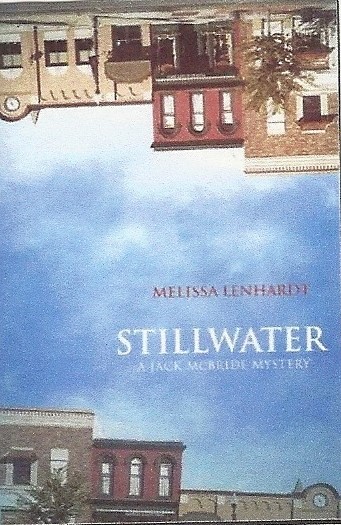
Today's post is a review of Stillwater, by Texas writer Melissa Lenhardt, who joined other members of the DFW Writers Workshop recently at the Dallas Public Library to discuss NaNoWriMo -- National Novel Writing Month. Through the end of November, members of the workshop will be available on Thursdays (except Thanksgiving) from 6 p.m. - 7:30 p.m. in the third-floor Conference Room B of the library, at 1515 Young Street, Dallas, to assist NaNoWriMo-ers with questions about outlining, creating characters, finding time to write, and more. Participating writers must be at least 13 years old.

The following review has appeared also at Goodreads and Amazon.

***

A handsome stranger appears in a small Texas town just vacated by a corrupt law enforcement official. It's the classic Western scenario, updated for the 21st century in Texas author Melissa Lenhardt's Stillwater. But unlike the horse opera versions of the story, 

hero Jack McBride can't ride a horse, dislikes getting his city slicker shoes dirty, and has no patience for cows. And he comes with a load of modern-day angst -- a wife who disappeared under mysterious circumstances, a previous job he left under a cloud, and an angry teenage son.

An ex-FBI agent, McBride seems an unlikely pick for the small town's new chief of police. He thought the job in the town of Stillwater, Texas, where crime is seldom seen or heard, would be a welcome change from big city life. But his first day on the job he walks into a gruesome murder-suicide (or is it a double murder)? And then there's a long-cold case of a missing, possibly murdered wife, that parallels his own family's situation.

Fortunately, he's got the town's savvy mayor behind him, not to mention the mayor's winsome protege, Ellie Martin. But both mayor and Martin have angst of their own to fill a wagon train. Can McBride solve Stillwater's sudden crime spree before it kills him? And can he find true love to salve a heart broken by his missing wife ?

I sometimes found the romantic elements that envelope both McBride and his son distracting, but overall Lenhardt draws a well-nuanced picture of a small town and the even that can lurk within the hearts of her cast of characters. Maybe a tad too many characters -- I found myself flipping back through pages to remember who was who. But Lendhardt is leaving enough threads to fill a sequel (The Fisher King, out this month), perhaps even a series.

Tuesday, November 8, 2016

Wordcraft -- On the president's Secret Service

It’s the second week of November and every writer knows what that means – we’re a quarter of the way through NaNoWriMo! That’s National (although now international) Novel Writing Month.

Oh, you thought I meant the election. . . Well, there’s nothing more we can do for that except stand in the rain waiting to vote if we were as foolish as I am and waited until the last day. No, today I want to write about something we can do something about – writing. And while we’ve got presidents on our mind how about the men and women who protect presidents (and presidential candidates) – the U.S. Secret Service? How about someone like ex-Secret Service agent turned Texas writer, Larry Enmon?

Larry Enmon at Mystery Writers
Enmon’s career in law enforcement has ranged from work as a patrol officer with the Houston, Texas, police department, to special agent with the Food and Drug Administration’s Office of Criminal Investigation, to the U.S. Secret Service, where he also worked as liaison agent to the FBI and on counterterrorism investigations. Now also a member of the DFW Writers Workshop, he boiled down his five favorite tips for writing crime stories like an insider for the recent meeting of the Dallas chapter of Mystery Writers of America. 

It was a dark night in a still-untenanted Houston development. The call: body in the street. Confessing that he may have driving a tad fast on the unlit streets, Enmon suddenly saw the body in headlights, too late to stop. And ran over it. Already horrified, he glanced in his side mirror. The victim’s head was now severed from the body! Gamely, perhaps shakily, he stepped out of the cruiser to examine the body with his flashlight and found it was – a mannequin – illustrating his first point for authentic crime stories:

1.      The “oh-sh*t” moment.

“Things don’t always go as expected,” he said. “As writers, if you don’t have one of those moments, you’re not doing it right. It’s not a plot twist – it just happens and it takes everybody by complete surprise.”

Of course, every insider has some bone to pick with the way their profession is portrayed in books, movies, television. Enmon’s isn’t just the wildly improbable, it’s also the portrayal of members of his profession as dour.

“Police are a lot more humorous and funny than people give them credit for. And it’s all emergency responders, including medical personnel. They got to have a sense of humor to survive. And yeah, sometimes it’s dark humor. They just can’t show it to the public. Leading to his second point:

2.      Give them a sense of humor. Or at least some quirkiness.

Another of Enmon’s stories: during one of President Ronald Reagan’s motorcades, startled officers in the hovering “huntsman” – code name for the motorcade’s accompanying helicopter – reported that “Rawhide” – the code name for Reagan – was out on the street. Furthermore, the two motorcycle officers leading the motorcade had suddenly fallen from their motorcycles and were lying stunned, possibly dead or wounded, in the street. As horrifying possibilities flashed through the minds of all onlookers, Reagan approached the fallen cops and asked whether they were OK. And they admitted sheepishly that they had misjudged the distance between their cycles and crashed into each other. 

Not that there isn’t plenty of darkness in the lives of people who routinely have to worry about being killed. Or of killing someone else. And taking it home with them. “There’s a lot of alcoholism, a lot of depression, a lot of suicides among cops,” Enmon noted. “And the tension is felt by the family too.” His third point:

3.      Everybody has an outside life beyond the job. And sometimes it’s not a happy one.

Leading immediately to point number four:

4.      Police have emotions like everyone else. They just can’t show them.

“It’s like being in combat too long,” Enmon said. “Sometimes you talk it out with each other.”

Or perhaps you can get them to buy you a drink. Flying to Paris on an assignment, Enmon and his partner only learned as they boarded their plane that they would need visas for the trip. They called the Secret Service’s headquarters. No problem, HQ said. Our man in Paris (yes, there are liaisons for most U.S. law enforcement agencies at embassies) will have them waiting for you. Except that he didn’t. And French immigrations officials were not amused, locking up the Americans until the courier showed up with the missing visas. His penalty – buying the drinks that night on the Champs-Élysées. Which leads to Enmon’s final point:

5.      Don’t make things too easy.

An apt reminder for writers in any genre.

For more about Enmon, his career and his work and whether he’s willing to tell you that your crime story scene (no manuscripts, please) is totally off the rails, see his site or contact him at larry@larry-enmon.com.