Showing posts with label Texas authors. Show all posts

Monday, June 3, 2019

Dallas Festival of Books & Ideas – books were not forgotten!

What was I expecting from the increasing entanglement of the annual Dallas Book Festival with the Dallas Festival of Ideas? Over several years, the two events have moved closer together – to the point of sharing both a date and location in the Central Branch of the Dallas Public Library – a pairing that made for claustrophobia as inspiration. Due to personal scheduling conflicts, I can only speak of the book portion of the festival.

This year’s pairing, the Dallas Festival of Books & Ideas, spread the “ideas” portion spread over five days, all in separate locations. For the most part, the “books” portion, retitled “Summer in the City,” was confined to the past Saturday at the library. The omission of the word “books” from the library’s listing of events was slightly disconcerting, but writing and reading themselves were not slighted, and the separation of festival locations greatly reduced congestion and the sometimes-dueling overlap of author readings and panels of past book festivals.

Dallas Central Library branch
 I missed the bravura, nationally acclaimed author presentations of a few years ago, but still appreciated the diversity of Texas authors and interest groups – from “must-reads” by African-American authors (presented by The Dock Bookshop of Fort Worth); to presentations from the Jane Austen Society of North Texas; Society of Children’s Book Writers & Illustrators; and Dallas Area Romance Authors. 

There were major attractions – children’s writer Laura Numeroff (If You Give a Mouse a Cookie); award-winning fantasy/horror writer Joe R. Lansdale (The Elephant of Surprise); Steven Davis and Bill Minutaglio’s nonfiction narrative of Richard Nixon’s fixation on LSD guru Timothy Leary (The Most Dangerous Man in America); historical fiction writer Melanie Benjamin (Mistress of the Ritz); and author of women-oriented Westerns, Melissa Lenhardt, whose latest volume, Heresy, has been described as a “queer, transgender, multiracial takeover of the Old West.” 

I also appreciated an emphasis on younger audiences, and people who might be less literarily conscious, reflected in discussions of fanfiction, the writing of science fiction and fantasy for children and teen audiences as well as adults (presented by the DFW Writers Workshop), exposure of young readers to the Sherlock Holmes canon (presented by local Holmes society, The Crew of the Barque Lone Star), and writing family histories, followed by performances by local teen rap artists.

And of course, the opportunity to sign up for the Mayor’s Summer Reading Challenge, with perks and prizes for readers from 1-100. If you missed this one, never fear, I’ll post later with more details, including how even kids too young to read can win!

If in all this, anybody feared that the Dallas Book Festival had left purely literary works left in the dust, WordSpace presented local poets B. Randall and Opalina Salas, and translators for local press Deep Vellum discussed their latest, selected poems of Goethe.

How the combined, intertwined festivals of books and ideas will work in the future remains to be seen, but here’s hoping the broadened festival base will attract – and keep – sponsors and visitors alike.

(Still to come, snippets and deliciously outrageous comments from the presentations by authors Davis and Minutaglio, Lenhardt, and the Crew of the Barque Lone Star.) 

Friday, May 19, 2017

Review: New kid in school -- science fiction as a guide to life

Review of: Revenge of the Star Survivors
Author: Michael Merschel
Publisher: Holiday House
Source: Purchase, Barnes and Noble
Grade: B

You don’t have to be the new kid in school to understand the protagonist’s plight in Dallas Morning News book page editor turned novelist Michael Merschel’s Revenge of the Star Survivors. If you’ve ever been the new hire, the new parent, the new homeowner, the new -- well, you name it -- you’ll get it.

Unfortunately, hero Clark (“like the explorer”) Sherman, who’s facing the first move, and first major trauma, of his young life, doesn’t get it. His parents think moving from their longtime home in Louisiana to Colorado for a job upgrade is a great idea. To Clark, it’s the end of the world as he knows it. Following the example of his favorite television show, Star Survivors, about a spaceship crew lost in the galaxy, he records his thoughts as entries in an astronaut’s log of a journey to an alien world, Planet Festus, aka Loretta T. Festus Middle School.

“We were hurtling across the planet’s surface, seconds away from the drop zone, when my commander spoke. ‘You really want to do this by yourself? You’re absolutely sure?’ The tiny crease between her eyebrows told me she was as worried as I was. ‘I’ll be fine,’ I replied. By which I meant, ‘No, I don’t want to do this at all. . . Please take me home immediately.’ Unfortunately, I sent that second part via psionic mind blast, forgetting that I was not technically capable of telepathy.”

The climate of Planet Festus proves hostile from the start, with its unfamiliar frozen ground and frozen precipitation. The inhabitants are equally hostile, particularly the one bearing a disconcerting resemblance to a “big, carnivorous reptile.” And the planet’s communications system is beyond primitive, having consigned Clark’s previous school records to the local equivalent of a black hole. Fortunately, among the few academic options available to him is Independent Study, which takes place in the school library, aka The Academic Resource Center.

There, at last, he begins to find allies – the aptly-named Ms. Beacon (“the commander of this zone”), and one of the school’s few Asian-American students, Ricki Roi (whose last name Clark misunderstands as “Wah”, a misunderstanding that stymies his attempts to communicate with her outside the classroom).

There’s also Les, an elusive, possibly wormhole dwelling student who will reveal dark secrets about Planet Festus and its leaders. The only thing uniting the disparate threesome of Clark, Ricki and Les: their mutual devotion to Star Survivors. Well, that and their resistance to the rest of Planet Festus.

On their journey through the planet they must deal with bullies, racism, and an evil ruling coalition determined to perpetuate its dynasty. The with whom they will clash in a dramatic conclusion. And as all middle schoolers do, the threesome must also deal with parents who seem initially clueless. At least in the case of Clark’s parents, they finally understand in the end.

This is why, as Clark records in his log, “. . . you should ignore anyone who tries to tell you that Star Survivors is an entertainment program. It is so, so much more. It is a guide to orderly behavior in a confusing world.”

(Unknown to Merschel, his mother had arrived from Colorado for his book’s debut. She was warmly supportive. He was slightly embarrassed that she might think the portrayal of the mom, aka commander, in his book was a portrait of her. Perhaps one day his own children, including two who were in middle school during writing, will write their own books about him. It’s the fate of parents and children.)

At his book’s release this spring at the Lincoln Park Barnes and Noble bookstore, Merschel insisted he didn’t even realize he’d written a middle grade book until others in the publishing business informed him who his audience was. Or who they thought it was. As someone who has dipped for the past thirty years into what my daughter and grandkids were reading, I can attest that good books for children have a universal appeal.

With so much good in Revenge of the Star Survivors, my major complaint is that in its determination to root out all evil from Planet Festus it feels over-stuffed, an over-richness that may have led to its too hurried for my taste climax, as if Clark/Merschel was either tiring of his long battle, or perhaps facing pressure from his publisher to get to the end. And although I initially bought the book intending it as a gift for my soon to be middle-schooler grandkids, I’m going to hold off transferring it for a while, for fear it might prove too terrifying for them. But given the state of life on Planet Earth, they may already be all too familiar with the terrain of Clark's world.

(Next week: summer literary events, contests, conferences, and a Dallas visit from internationally-bestselling Australian author, Kate Forsyth.)

Tuesday, March 14, 2017

Review: Kent's latest heroine stomps Dallas bad guys

Review of: The Dime
Author: Kathleen Kent
Publisher: Mulholland Books
Source: Purchase, Barnes and Noble
Grade: A

It’s not every author whose first book out of the chute can score New York Times bestseller status, as Texan Kathleen Kent did with her fictionalized account of a distant ancestor hanged during the Salem witch trials. But after a string of award-winning books of historical fiction, Kent has turned to a modern version of her trademark “ferocious women” with her newest novel, The Dime, starring the police detective she first launched as the heroine of a short story in the crime anthology Dallas Noir – Detective Betty Rhyzyk.

Not sure how to pronounce her name? Just call her "Riz". 

She isn't thrilled to relocate from her home in Brooklyn to Dallas, Texas. But when her domestic partner Jackie returns to Big D to be near her aging mother, Betty’s not about to give up the love of her life by staying behind. She’s bested the toughest criminals and most sexist fellow police officers in New York. How much worse can Texas dish out?

Well, there’s the blatant bigotry over her sexual orientation, shared both by Jackie’s family members and the law enforcement officials of Betty’s new department. And the incessant heat, “a monster wrapped around my head, all bristling mirrored scales, sliding tongues of sweat into my ears and down my neck.” And the vicious turf battles between Mexican and biker drug cartels.  

Still it isn’t until one sunny Texas Sunday that things really fall apart. It starts when a perfectly ordinary drug stakeout goes south, leaving three dead, including another cop, and one of her own team wounded, a “bat-shit-weird sequence of connecting circumstances (that) oozes into the world seemingly from an alternative universe. . . so dangerous you don’t even want to think about it.”

Little does Betty know there’s far, far worse to come, as Kent takes her readers on a ride wilder than any bucking bull, following the trail of a gang of drug dealers who scatter the body parts of their murdered victims across the Lone Star State. Although Kent’s language is still as gorgeous as anything in her historical fiction, after The Dime, she makes every other mystery seem like a cozy.

Fortunately, Betty can call upon years of law enforcement experience in the Big Apple to call upon for help. Not to mention her ever-present medallion of St. Michael, patron saint of police, and the wisdom of her Uncle Benny, wise in the ways of “Reaping the Grim,” as he termed his exorcism of the angst and rage that can eat the souls of those who witness the effects of bloody violence in the course of their duties.

A Texas native who spent decades working in New York, Kent demonstrates her knowledge of both NYC and all things bizarrely Texan: living in the city that killed JFK. Or lining up for tacos at a gas station turned zoo.

But is it only in Rhyzyk’s universe that Civil War re-enactors battle drug dealers with 19th-century muskets and cannon? Or that a professional rodeo rider turns cop. Or drug dealers quote scripture to justify murder and mayhem? It's all in a day's work for Detective Betty.

Kent's fast-paced writing reaches a climax satisfying enough for a stand-alone novel, including a delightful explanation of its title. Luckily for readers in love with Detective Betty, she leaves enough threads hanging to justify the hope we'll see more of her indomitable heroine.

Tuesday, December 20, 2016

Wordcraft – Books and reviews to mix & match


The first time I noticed my ranking among Amazon’s reviewers, I was 1 million plus something. And I thought – wow, Amazon even has algorithms for ranking reviewers? Of course, I set my sights on #1, only to find that top rated reviewers gain their status by reviewing everything. In fact, thousands of everythings. Including baby shampoo. (The package was in good shape, it arrived quickly and the shampoo cleaned the reviewer’s hair nicely! A 5-star review!)
image: wikimedia commons

I decided to stick to reviewing books, occasionally posting reviews on this blog as well.  As I contemplated more book reviews for 2017, I enjoyed looking back at reviews posted in the past 12 months and thought – why not do a brief share with readers? Here are the openings of my reviews of several recent books by Texas authors and their titles/authors. See how many you can match. Better yet -- read the books for yourselves!

Review openings:

1)      Psychopaths make the best villains – in life as in fiction. But a psychopath as a main character? That’s what this Texas author has accomplished with a book whose anti-hero flashes the glibness and charm (superficial though they may be) of a true psychopath in a way that will have readers cheering for him against their will.

2)      Jane Austen fans can have Elizabeth Bennet – my fav Austen heroine is Emma Woodhouse. Yes, that Emma, the insufferable know-it-all who tries to fit her friends into incongruous romances while remaining blissfully unaware of her own admirer, her almost equally know-it-all brother-in-law George Knightley. So I was delighted to find the Emma-Knightley trope still alive and well on the plains of West Texas.

3)      Shortly after Saving Private Ryan appeared in movie theaters, I was aghast to hear that one of my co-workers had taken her then-teenage son to see it. She did it, she said, to keep him from getting any ideas that war was glamorous. Then came 9/11, and wars when both civilians and soldiers die – or sometimes worse, live – without any thought of glamour, under circumstances of almost unimaginable, unremitting horror. Those are the kinds of wars this Texas author writes about.

4)      The latest installment in this Texas writer’s series of thrillers starring an ex-CIA agent is the story of a plot to assassinate an autocratic, plutocratic ex-KGB agent who happens to be president of Russia. Readers may rest assured that the Russian president in question is completely fictional. Any resemblance between him and current Russian president and billionaire ex-KGB agent Vladimir Putin is, of course, purely coincidental.

5)      A tall handsome stranger rides into a small Texas town just vacated by a corrupt law enforcement official. It’s the classic Western scenario, lovingly but devastatingly updated for the 21st century by this Texas author. But unlike the horse opera versions of the story, this hero can’t ride a horse, dislikes getting his city slicker shoes dirty, and has no patience for cows. And he comes with a load of modern-day angst – a wife who disappeared under mysterious circumstances, a previous job he left under a cloud, and an angry teenage son.

6)      One spring day in 1940, a 29-year-old West Virginia coal miner went to work as usual. Wearing his carbide lantern helmet, carrying his dinner bucket, he said goodbye to his wife and three children, the youngest a five-month-old infant. His family would never see him alive again. In compensation for his death, the mining company paid his widow one thousand dollars. It also ordered her to clear out of the little company house she rented, because on the first day, the family of the miner who would take her dead husband’s place was moving in.
image: wikimedia commons

 Titles/authors:

            A)    Stillwater, by Melissa Lenhardt
B)    The First Order, by Jeff Abbott
C)    Steel Will, by Shilo Harris
D)    Interference, by Kay Honeyman
E)     Running on Red Dog Road, by Drema Hall Berkheimer
F)     Hollow Man, by Mark Pryor


(Answers: 1, F; 2, D; 3, C; 4, B;5, A; 6, E)

Tuesday, November 22, 2016

Wordcraft -- Channeling Austen on the football field

Interference

by Kay Honeyman

***
As 2017 approaches, this blog site will metamorphose into a book review site. Not that I’ve ever been reluctant to share space with current authors, especially when, like Kay Honeyman, they’re fellow Texans. The following review of her YA novel, Interference, has also appeared at Goodreads and Amazon.

***

Honeyman and daughter
Jane Austen fans can have Elizabeth Bennet – my favorite  Austen heroine is Emma Woodhouse. Yes, that Emma, the insufferable know-it-all who tries to fit her friends into incongruous romances while blind to her own admirer, her almost equally know-it-all brother-in-law George Knightley. So I was delighted to find the Emma-Knightley trope still alive and well on the plains of West Texas in Kay Honeyman’s YA romance, Interference. But there are no bonnets or maidenly blushes in Honeyman’s version. This time around, it’s congressman’s daughter Kate Hamilton who’s channeling Emma. After a vengeful ex-boyfriend posts disgraceful photos of Kate online, her family retreats to her father’s hometown of Red Dirt, Texas.

But is the move to spare Kate the notoriety of scandal at her D.C. school, as she broods, “. . .what pushed Mom and Dad into this three-day, five-state road trip was that the pictures made them look bad, like they were neglectful parents,” Kate broods. “Part of me wished that for once they’d spent some of their political capital to defend me. . . Instead, we packed up and drove to Texas.”

Or, as she also suspects – and doesn’t sit well with a teen – is the move really to reboot her father’s flagging political career, as he is down 15 points in his bid for reelection in his East Coast district?

Not that her family’s problems weigh heavily on Kate’s mind. She’s more worried about her standing at her new high school in the tiny town of Red Dirt, Texas. The photo-scandal at her former school has ruined any chance for the teachers’ recommendations. She’ll need great photographs in her own portfolio to qualify for admission to the art college she has her heart set on. Not to mention a long string of volunteer hour credits

Red Dirt High School offers no classes in photography and its only darkroom belongs to the school’s yearbook sponsor. Can Kate take pictures for a yearbook, especially of the high school football team that is the town’s pride and joy? She swallows her pride in exchange for a chance to use the darkroom.

And those volunteer hours? Her only chance to add them to her resume is a local animal shelter, where Kate is quickly introduced to the realities of ranch life. And to the other volunteer – enigmatic fellow Red Dirt student Hunter Price, who scorns Kate’s big city pretensions.

Adding to her horror, she finds herself immersed in politics both inside and out of high school, yet another political campaign, when her father files as a surprise candidate for Congress from Red Dirt’s district – with an opponent whose son Kyle is the star quarterback of the high school football team. Still, Kate decides, handsome Kyle would make the perfect boyfriend for her new friend, fellow yearbook photographer Ana Gomez. Or would the annoying Hunter, who mysteriously quit the football team himself, make a better match for best friend Ana?

As Kate’s matchmaking brings turmoil to all around her, she finds herself actually beginning to enjoy Red Dirt, enjoy using her political skills to help her father – and finally realize where her own heart is leading her.


I’ll admit, I had to let some of the turmoil of this year’s election campaigns cool off before I could bear to read a story about another election. Honeyman's Texas -- and its politics -- are of a kinder, gentler strain than those most adults would recognize. But her sprightly dialogue, the gritty, gutsy teen characters – slightly smoothed over for younger readers -- and the genuineness of the Texas setting and the state’s mania for football make Interference worth my vote. 

Tuesday, November 15, 2016

Wordcraft -- What evil lurks in a small Texas town?

As 2017 approaches, my blog will metamorphose into a more book review-oriented site. I've always been willing to share Wordcraft's space with current authors -- especially if they're from my home state of Texas. But never fear -- when significant literary events occur, including the ever-popular writing contests, I'll let readers know. Speaking of contests. . . Carve Magazine announces that the deadline for submissions to its premium Edition Contest for fiction, nonfiction and poetry has been extended to November 30. (Carve has a place in my heart because its editor is fellow Texan Matthew Limpede. See the site for details.)

Melissa Lenhardt
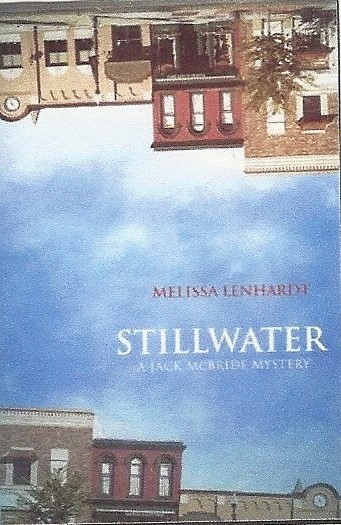
Today's post is a review of Stillwater, by Texas writer Melissa Lenhardt, who joined other members of the DFW Writers Workshop recently at the Dallas Public Library to discuss NaNoWriMo -- National Novel Writing Month. Through the end of November, members of the workshop will be available on Thursdays (except Thanksgiving) from 6 p.m. - 7:30 p.m. in the third-floor Conference Room B of the library, at 1515 Young Street, Dallas, to assist NaNoWriMo-ers with questions about outlining, creating characters, finding time to write, and more. Participating writers must be at least 13 years old.

The following review has appeared also at Goodreads and Amazon.

***

A handsome stranger appears in a small Texas town just vacated by a corrupt law enforcement official. It's the classic Western scenario, updated for the 21st century in Texas author Melissa Lenhardt's Stillwater. But unlike the horse opera versions of the story, 

hero Jack McBride can't ride a horse, dislikes getting his city slicker shoes dirty, and has no patience for cows. And he comes with a load of modern-day angst -- a wife who disappeared under mysterious circumstances, a previous job he left under a cloud, and an angry teenage son.

An ex-FBI agent, McBride seems an unlikely pick for the small town's new chief of police. He thought the job in the town of Stillwater, Texas, where crime is seldom seen or heard, would be a welcome change from big city life. But his first day on the job he walks into a gruesome murder-suicide (or is it a double murder)? And then there's a long-cold case of a missing, possibly murdered wife, that parallels his own family's situation.

Fortunately, he's got the town's savvy mayor behind him, not to mention the mayor's winsome protege, Ellie Martin. But both mayor and Martin have angst of their own to fill a wagon train. Can McBride solve Stillwater's sudden crime spree before it kills him? And can he find true love to salve a heart broken by his missing wife ?

I sometimes found the romantic elements that envelope both McBride and his son distracting, but overall Lenhardt draws a well-nuanced picture of a small town and the even that can lurk within the hearts of her cast of characters. Maybe a tad too many characters -- I found myself flipping back through pages to remember who was who. But Lendhardt is leaving enough threads to fill a sequel (The Fisher King, out this month), perhaps even a series.

Friday, October 30, 2015

Adventure classics – When animals turn the tables on us

“Engine Horse” from The Animal Lover’s Book of Beastly Murder
by Patricia Highsmith
***
What’s a human being to think when a friendly, taken for granted animal turns deadly? And I’m not talking about Cujo. Before Stephen King ever penned his 1981 story about a big dog turned rabid killer, Patricia Highsmith was turning her misanthropic eyes on a whole bevy of animals who took far more rational revenge on the often-vicious humans around them. Readers of Highsmith’s 1975 story collection, The Animal Lover’s Book of Beastly Murder  will never view pets, farm animals, zoos or circuses the same way again.

In common with Highsmith’s more widely-known thrillers such as The Talented Mr. Ripley, the murderers are more winning than their victims. Among the most sympathetic is the murderess du jour: Fanny, the big, slow-witted plow horse who lives only to eat, sleep and work. That is, until the day a little grey kitten enters her stable and claims her gigantic heart.

“(That day) Fanny had not done anything that she could remember except walk with the woman Bess to the water tank and back again. Fanny had a long period of munching in daylight, before she lay down with a grunt to sleep. Her vast haunch and rib cage, well covered with fat and muscle, hit the bed of hay like a carefully lowered barrel. . . The little grey kitten, which Fanny could now see more clearly, came and curled herself up in the reddish feathers behind (her) left hoof. . . The mare was somewhat pleased. Such a dainty little creature! That size, that weight that was nothing at all!”

But in the farmhouse all is not well. Farm owner Bess Gibson’s only relative, her grandson Harry and his wife have come to visit – and to talk Bess into giving him money for a business venture he has in mind.

“Gramma, it’s as simple as this,” Harry says. “I need sixty thousand dollars to buy my half. . . but if I can’t put up my part in a few days, Gramma – or can’t give a promise of the money, my chances are gone. I’ll pay you back, Gramma, naturally. But this is the chance of a lifetime!”

Bess is unimpressed, both with smooth-talking Harry and his “pretty and silly” wife, Marylou. And as Harry’s chances of wheedling money out of Bess dwindle, he begins to plan other ways to get the money he wants. “I’m thinking,” he tells Marylou, “if Gramma had something like a hip injury, you know – those things old people always get. . . she’d have to stay in a town, wouldn’t she – if her couldn’t get around?”

And Harry has thought of just the way to provide that “accident” that will force his grandmother to sell the farm – “going on a picnic, the way she says she does, you know? With the horse and wagon. . . then the wagon turns over somewhere. . . ?.

It all seems simple, that is until Harry, awkwardly attempting to harness the “engine horse” for the wagon tramples on and kills the kitten.

Picking the dead kitten up by its tail, he throws it far away into the field. And Fanny, the engine horse, sees. She at first follows Harry docilely, but her awareness of the connection between him and the kitten’s death comes, “slowly and ponderously, even more slowly than she plodded across the meadow.” And Harry, unknowingly, leads the big horse toward his own doom.

For most of her life, Fort Worth, Texas, native Highsmith remained relatively unknown in the United States, even after Alfred Hitchcock’s film version of her first novel, Strangers on a Train. When her American agent told her, as biographer Joan Schenkar reports in The Talented Miss Highsmith, that the reason her books weren’t selling in the United States was because there was “no one likeable” in them, Highsmith replied, “Perhaps it is because I don’t like anyone. My last books may be about animals.” At least one of those, The Animal Lover’s Book of Beastly Murder, was.


(Next Friday, Adventure classics begins a November of fantasy with E.R. Eddison’s The Worm Ouroboros.)

Monday, July 7, 2014

Wordcraft -- From thrilling life to thrills of books

Taylor Stevens has the life easier to read about than to live: brought up in a nomadic religious cult in countries across the world, she escaped the cult at age twenty-nine and became a New York Times bestselling author of the Vanessa (Michael) Monroe series of thrillers.

Would I have killed bad guys with my bare hands to meet her? Lucky for the bad guys (and me--I’d be liable to develop hangnails if I turned bare-fisted assassin) all it took to see and hear Stevens was a visit to Saturday’s meeting of Dallas Mystery Writers.

After escaping the cult, New York-born Stevens and her husband made their way to the United States, where she became the stay at home mom to their two small children. The cult had pulled her out of school after she finished the sixth grade, and the remainder of her childhood was spent doing unpaid labor for the group, including begging. Except for a few children’s volumes from elementary school, books were virtually unknown to her. Back in the U.S., while her husband worked, she became a stay at home mom to their two children, making additional money by reselling garage sale finds on the internet. And she found out about books, at first, “because I could mark them up so much on eBay.”

From buying and selling books, she started to read them. And discovered Robert Ludlum, whose Bourne series thrillers. “This was the first time I realized how intense an experience reading could be. I wished I could make other people have the experience in reading that I had.”

The catch was, she knew nothing about writing novels. After internet searching, she found the Gotham Writers workshop and books, and began writing. Her first novel, The Informationist, introduced protagonist Vanessa (Michael) Monroe. The book became a New York Times bestseller, followed by The Innocent, The Doll, and this year, The Vessel and The Catch.

Unlike most writers, who start with some idea of plot or character, the initial inspiration for her books was a country. (She has lived in several of the African countries that served as settings.) Then, since “everything in a book has to make sense, I started asking ‘why.’ Why do people go there? What makes them stay?” and more such questions to build the story.

They were questions she could answer, because as she said, “I’ve been in a lot of third world countries. I know what it takes for a single woman to survive in those countries.”

Her goal when she first started writing, she said (in words reminiscent of fellow bestseller Diana Gabaldon) was simply to finish a book. But during the writing, she began to research literary agents.

After studying the examples at the QueryShark site, she developed two query letters and told herself, “I’m not even going to sweat it until I’ve had a hundred rejections. I’d send one (query) version to five agents, wait two weeks, and send the second version to five more agents. By the time I’d sent to twenty agents I was getting requests.”

“I was very much an organic writer when I started,” she said. Now divorced, her need to write to support herself and her children has given her a decidedly businesslike attitude toward publishing. “Since then, I’ve become much more of a plotter. Plotting gives me much more clarity. I sit down and tell myself the story, building it off scenes. If you know what the key scenes are, you can get from place to place.”

Stevens will make two more appearances in the Dallas area this month--July 15 at Barnes & Noble in Frisco’s Stonebriar Center Mall, and July 26 at the Lewisville Public Library. For more about Stevens, her writing and appearances around the state, see
www.taylorstevensbooks.com/.

And for more about the QueryShark site Stevens used, see http://queryshark.blogspot.com/.

Wednesday, December 5, 2012

Adventure classics -- What they did for love

“The Gift of the Magi”

by O. Henry

#

“O. Henry’s stories are marked with the manners of the decade in which they appeared, but this has not diminished their appear to popularity,” editor Harry Hansen wrote in the foreword to his 1960 collection, The Complete Works of O. Henry. “The clothes people wear have altered; the emotions that move them remain the same.”

In the century since O. Henry’s most enduring story, “The Gift of the Magi,” appeared, young women like the story’s heroine seldom boast hair long enough to fall below their knees. Men like her husband seldom pull their grandfathers’ gold watches out of their pockets to tell the time. But do they still love?

Unabashedly sentimental, the story occupies little more than four pages in the collected works of William Sidney Porter, who adopted the pen name O. Henry while in prison, possible to conceal his incarceration from potential editors. It’s the story of Della, a young wife who longs to buy a wonderful Christmas present for her husband, Jim. But living in an apartment which if “it did not exactly beggar description, certainly had that work on the lookout for the mendicancy squad,” didn’t leave either of the young people much money for frivolities. Especially not anything Della considered “just a little bit near to being worthy of the honor of being owned by Jim.”

But if Jim has one treasured possession -- his inherited pocket watch -- so does Della. It’s her hair, “rippling and shining like a cascade of brown waters.” The sale of the hair brings Della enough money to buy a fob for Jim’s watch. But although she prays he’ll
think she’s still pretty even with short hair, his reaction is beyond her understanding.

“There are stories in everything,” Porter said in an anecdote Hansen quotes in his collection. And there was a story from real life in the romantic tale of a young couple’s apparently fruitless sacrifice for love.

In the 1890’s, Porter was arrested for embezzlement following arrears in his bookkeeping while employed at an Austin, Texas, bank. He fled to Central America, making plans for his young wife, Athol, to meet him in Honduras. Athol, however, had tuberculosis. When he learned she was dying, Porter returned to Texas in 1897. The next year, following his wife’s death, he was found guilty and sentenced to prison. In an irony he would have appreciated, the building in Austin’s Sixth Street Historic District where he was convicted has since been renamed “O. Henry Hall.”

“I have lamely related to you the uneventful chronicle of two foolish children in a flat who most unwisely sacrificed for each other the greatest treasures of their house,” O. Henry’s story concludes. “But in a last word to the wise of these days let it be said that of all who give gifts these two were the wisest. . . They are the magi.”

Even if you know the story, read again. It only takes a few minutes. In the public domain at numerous sites, including
http://en.wikisource.org/wiki/The_Gift_of_The_Magi/.

(Next Wednesday, during December’s month of spirited adventure classics, I’m indulging in short reads, continuing with Truman Capote’s “A Christmas Memory.”)