Showing posts with label DFW Writers Workshop. Show all posts

Tuesday, July 22, 2025

Looking ahead to fall: a contest & a conference

I was ready to post about the annual DFW Writers Conference, October 4-5, when a related post hit my inbox: a contest for a scholarship to the conference.

First, because the scholarship contest deadline is September 1, here's the lowdown about it.

The scholarship is from Dallas Mystery Writers, in memory of LaRee Bryant, a founding member of the group. The scholarship's winner will receive paid-in-full registration for the 2025 DFW Conference, valued at $500, to be awarded at the September 6 meeting of the DMW.

Now for the contest rules:

  • No entry fee!
  • Open to all fiction genres
  • Contestants must be on the Dallas Mystery Writers mailing list. There's no for joining the list. See the site and click on the link "James" -- that's James Gaskin, the group's tech coordinator. Or email him directly at james@gaskin.com
  • Contestants cannot have had fiction traditionally or self-published within the last five years. This applies to both short and long-form fiction works.
  • Contestants must submit a 1000-1500-word writing sample, along with a bio of not more than 300 words, to include their writing goals.
  • Entries must be submitted electronically as Word (docx.) documents, double-spaced, with 1-inch margins, in 12-point Times New Roman font.
  • Email entries to sandysteenwrites.@gmail.com  
All entries will be judged by the DMW Board of Directors. The deadline, again, is September 1.

LaRee Bryant was involved for more than 34 years with Dallas Mystery Writers. She was also a chapter administrator for both the Harvard Club of Dallas and the Harvard Business School Club of Dallas. See the DMW site for additional information and/or to contribute to the Harvard Clubs GoFundMe campaign to renovate LaRee's homestead.

Now, for some asides.

I'm not eligible to participate in the contest, due to recent short fiction publications. However, I hope my previous experience with this group may be helpful. 

A few years ago, I and several members submitted writing samples for evaluation by the DMW board. My sample was written in present tense. One of the board members insisted--loudly--that she couldn't even read anything written in present tense. Another simply wrote "Present tense. Ick," on my pages. The matter generated a protracted discussion in the group about how many of them detested anything written in present tense.

It's possible the prejudice about tense no longer exists. But you have now been warned. If the winner turns out to be someone who sent an entry in present tense, I'd love to hear from you!

I'm also not sure how the scholarship winner's registration to the DFW Writers Conference will be dealt with if the person had previously registered. That's probably a question to put to the conference organizers themselves.

Image: Pixabay 

So, now to the DFW Conference information.

The conference is a program of the nonprofit DFW Writers Workshop. It will be held at the Hurst, Texas, Conference Center, 1615 Campus Dr. As of this writing, the adjoining Hurst Garden Inn Dallas still has rooms available at conference rates.
 
Regular conference registration for both October 4-5 is $449 through September 21. Regular one-day registration for either day is also available through September 21 for $250. Late registration from September 22-October 2 is $499 (two-day) or $299 (one day only).

Registration includes attendance at craft and business workshops with industry professionals, one complimentary pith/consultation session with a literary agent or editor (with additional pitch sessions available for purchase), lunch with keynote speakers, and more. 

See the site for additional information and a list of agents and editors who have committed. 

The conference also hosts a pre-con workshop, "Finding Your Voice," taught by award-winning, multiply-anthologized author Ari Tiso, a member of the Bribri tribe of Costa Rica.

The pre-conference workshop is October 3, from 12:30 p.m. - 4 p.m. Attendance is $50 for conference attendees, $100 for non-attendees. See the site for additional information and registration.

Tuesday, December 29, 2020

2020 countdown – readers’ favorite posts, day 4

 Continuing the countdown of top posts for 2020, here’s: 

Never write alone – there’s a critique group for that! 

Has anybody else ever been in this situation? I found an adorable premise for a story – actually, stole it, but that’s a tale for later – only to have critique partners shoot it down. And thank dog they did! 

It seemed so lovely. My fingers flew over the keyboard until the workshop members at the Writers Guild of Texas said, in the politest possible way, really? Would anybody in the character’s situation think like that? Part of the problem, I realized, was that the style wasn’t a good fit for me. The rest of the problem was that my eyes willingly overlooked whatever I didn’t want to see. Hello, rewrite. And a much happier me with the resulting version. 

But what would have happened without those other sets of eyes on my story? And how can a writer find those other eyes and voices in a time when writing workshops probably aren’t included in our states’ list of “essential” activities? 

If there’s a bright side to a global pandemic, it’s the plethora of online activities it’s given rise to. Once, writers in places without in-person workshops were isolated from their peers. Now those peers are little more than a click away. 

I live in North Texas, home to WORD (Writing Organizations ’Round Dallas) whose site includes a map of member groups, including those with critique and discussion groups. You’ll need to contact groups that catch your attention, because not all websites have been updated to show which offer online activities. But for those that do, distance is no problem. 

I’ve even joined another critique group since first writing this post, at the DFW Writers Workshop. 

Image: Pixabay
Or maybe you’ve decided your writing skills could use a brush up during this time of sheltering at home, but cost, distance, or safety prohibit in-person classes. Hello, internet again. Besides WORD’s interactive map, check out the likes of Writing Workshops Dallas, a brainchild of multi-published short story author Blake Kimzey, for its online offerings. And don’t overlook the Writers’ League of Texas for ongoing, online classes. 

Yes, I am partial to Texas events, but again, with the internet, residence is not an issue. Writer’s Digest, for instance, offers its own school of online courses, as does The Write Life (which also helps with finding critique partners). There are also many other online courses listings that I haven’t had an opportunity to vet but would welcome reader feedback on.

Wednesday, December 26, 2018

New Year's countdown of readers’ favs of 2018: day 1

What – 2018 is almost over? No worries – for this final week of the year, I’m rerunning a sample of readers’ (and my) favorite posts, starting with a post first published January 26, 2018.

*** 
There was a full house at Interabang Books this week as Dallas’s newest independent bookstore and the Writer’s League of Texas hosted a panel discussion about community building for writers. And we hadn’t even known there would be cupcakes! (Those arrived courtesy of irrepressible panel member, author and community organizer, Arianne “Tex” Thompson, decorated with the names and logos of local writers’ communities.)

No, we were there because, despite the Hemingwayesque stereotype of writers as antisocial loners – possibly hard drinking ones at that – the local authors on the panel –Thompson, Kathleen Kent, Melissa Lenhardt, and Blake Kimzey – extolled the necessity of connections.
“It is so important for every industry to own its issues,” Thompson said. “For football, it’s brain injury. For ballet dancers, it’s eating disorders. For us it’s –”
“Hemorrhoids,” an audience member shouted.
Well, at least anxiety, Thompson acknowledged, when the laughter had died down. “You writers, there’s something seriously wrong with you!” (More laughter, some slightly self-conscious.) “It’s important that we need a counterbalance to the word hamsters running around in our heads. You need a writing community if you’re going to stay healthy and stay in the game.”
l-r, Lenhardt, Kent, Kimzey
And that, if in more chaste language, was the tone of the discussion moderated by the League’s member services manager, Jordan Smith. 
“Why is it important for writers to be in a community?” Smith asked. “And how do you find a community?”
Kimzey agreed. Now a prolific short story author and founder/director of Writing Workshops Dallas, he confessed to starting his writing career as an alternative to his day job.
“I was nodding off in a cubicle 10 years ago,” the author of “a lot of vignettes,” but no completed stories until he found a creative writing workshop at Brookhaven Community College. 
“It was transforming for me. There I was, getting feedback for the first time.”
He and the other students – mostly college freshmen and sophomores years younger than he was – took a second course together because they formed such strong bonds. (Kimzie would even take the course a third time, and end with nine completed stories.) “Now I have my gang of four, all at different stages. It’s important to have a cohort.”
“I started by going to the DFW Writers Workshop,” Lenhardt said, where she was able to grow her Stillwater mystery series and award-winning historical novels. “They ‘got’ me in a way my family didn’t.”
The stay-at-home mom went to her first workshop meeting and thought, “Oh, my God, nobody asked about my kids.” It wasn’t that workshop members didn’t care about her kids, she said, but that her relationship with them was being built as a comrade, not on the family connections which had previously dominated her life.
Kent, on the other hand, already completed the manuscript that would become her New York Times bestseller, The Heretic’s Daughter, on her own. She has said in other contexts that she kept her writing a secret from almost everyone except her mother, fearing the eyeball rolls if she confessed to it, with another career and well into middle age. “I wish I’d had a group like that.”
Which doesn’t mean it’s ever too late to start, either with writing or finding a community.
“Unlike, for instance, downhill skiing, writing is something you can begin at 50,” she quipped.

Thursday, January 12, 2017

Writing contests – there's more here than book reviews

This site isn’t all about reviews. Sometimes it’s about competitions, like a chance to win a free writing residency (and more!) from the DFW Writers Workshop. Or can you be tempted by a chance to have bestselling author James Patterson pick you from among his writing students to co-author one of his books? How about a critique (and chance to pitch to) a literary agent in your field? Or, if you’re a medical professional with a yen to write, check out an opportunity just for you.

January 15: Deadline for the Writers League of Texas 2017 manuscript contest is this coming Sunday, January 15. This is a chance to get your manuscript (in any of several genres) before the eyes of writing professionals. Winners in each category will meet individually with the literary agent who was the final judge in their category. No finished manuscript required, only the first approximately 10 pages plus a synopsis. Plus, you don’t need to live in Texas to qualify.
image: wikimedia commons
Fees are $55 for WLT members, $65 for nonmembers. All contestants, winners or not, will receive written feedback. Or plunk members can plunk down $25 ($35 for nonmembers) to enter and forego the written feedback. (Although why wouldn’t you want feedback?)
See the site for details and formatting requirements.
February 1 – March 1: James Patterson’s 22-lesson writing starts with how to get started and covers outlines, plotting, characters, dialogue and more. Includes class workbooks and a chance to submit drafts for feedback from fellow students (and maybe from Patterson himself.) Cost: $90. See the Master Class site for class details and information on how to enter the contest to be his next co-author.


March 10:  The annual Literature + Medicine conference, previously hosted by Texas Health Presbyterian Hospital Dallas, is moving to the campus of Southern Methodist University for this year’s conference, April 1. In addition to some wonderful speakers (last year’s special guest was Dr. Abraham Verghese, author of Cutting for Stone, among other works), the conference includes a creative writing contest. Sorry, this is only for health care professionals, but it’s a chance to exercise your skill at essays, poems and short stories about your experience in medicine. Check the Literature + Medicine site for details.

March 22: Now, for those who’ve already written the first chapter of their novels for the Writers League contest, (who are hard at work on the same), get more bang from your work by entering the first-ever writing residence contest from the DFW Writers Workshop. This is the organization that hosts an annual literary conference (this year, May 6-7). Now they’re giving us a chance to polish our work, not to mention free or reduced price admission to the DFWWW conference.

Grand prize winner gets free admission to the conference (which includes a 10-minute pitch session with an agent or editor), admission to VIP events not open to general conference attendees, two weeks’ room and board at the conference hotel, airfare to Dallas-Fort Worth from anywhere in the continental United States, manuscript critique and mentorship by a published author.

Second and third place winners receive free admission to the conference. Fourth and fifth place winners receive half-price admission.

Submit the first chapter (up to 5,000 words) of a book-length work in any prose genre along with an outline or synopsis demonstrating your vision and ability to complete the project. Fee per entry: $50. See the DFW Writers Workshop site for details. 

Tuesday, November 15, 2016

Wordcraft -- What evil lurks in a small Texas town?

As 2017 approaches, my blog will metamorphose into a more book review-oriented site. I've always been willing to share Wordcraft's space with current authors -- especially if they're from my home state of Texas. But never fear -- when significant literary events occur, including the ever-popular writing contests, I'll let readers know. Speaking of contests. . . Carve Magazine announces that the deadline for submissions to its premium Edition Contest for fiction, nonfiction and poetry has been extended to November 30. (Carve has a place in my heart because its editor is fellow Texan Matthew Limpede. See the site for details.)

Melissa Lenhardt
Today's post is a review of Stillwater, by Texas writer Melissa Lenhardt, who joined other members of the DFW Writers Workshop recently at the Dallas Public Library to discuss NaNoWriMo -- National Novel Writing Month. Through the end of November, members of the workshop will be available on Thursdays (except Thanksgiving) from 6 p.m. - 7:30 p.m. in the third-floor Conference Room B of the library, at 1515 Young Street, Dallas, to assist NaNoWriMo-ers with questions about outlining, creating characters, finding time to write, and more. Participating writers must be at least 13 years old.

The following review has appeared also at Goodreads and Amazon.

***

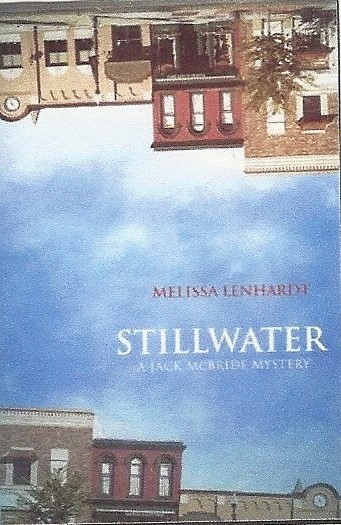
A handsome stranger appears in a small Texas town just vacated by a corrupt law enforcement official. It's the classic Western scenario, updated for the 21st century in Texas author Melissa Lenhardt's Stillwater. But unlike the horse opera versions of the story, 

hero Jack McBride can't ride a horse, dislikes getting his city slicker shoes dirty, and has no patience for cows. And he comes with a load of modern-day angst -- a wife who disappeared under mysterious circumstances, a previous job he left under a cloud, and an angry teenage son.

An ex-FBI agent, McBride seems an unlikely pick for the small town's new chief of police. He thought the job in the town of Stillwater, Texas, where crime is seldom seen or heard, would be a welcome change from big city life. But his first day on the job he walks into a gruesome murder-suicide (or is it a double murder)? And then there's a long-cold case of a missing, possibly murdered wife, that parallels his own family's situation.

Fortunately, he's got the town's savvy mayor behind him, not to mention the mayor's winsome protege, Ellie Martin. But both mayor and Martin have angst of their own to fill a wagon train. Can McBride solve Stillwater's sudden crime spree before it kills him? And can he find true love to salve a heart broken by his missing wife ?

I sometimes found the romantic elements that envelope both McBride and his son distracting, but overall Lenhardt draws a well-nuanced picture of a small town and the even that can lurk within the hearts of her cast of characters. Maybe a tad too many characters -- I found myself flipping back through pages to remember who was who. But Lendhardt is leaving enough threads to fill a sequel (The Fisher King, out this month), perhaps even a series.

Tuesday, November 8, 2016

Wordcraft -- On the president's Secret Service

It’s the second week of November and every writer knows what that means – we’re a quarter of the way through NaNoWriMo! That’s National (although now international) Novel Writing Month.

Oh, you thought I meant the election. . . Well, there’s nothing more we can do for that except stand in the rain waiting to vote if we were as foolish as I am and waited until the last day. No, today I want to write about something we can do something about – writing. And while we’ve got presidents on our mind how about the men and women who protect presidents (and presidential candidates) – the U.S. Secret Service? How about someone like ex-Secret Service agent turned Texas writer, Larry Enmon?

Larry Enmon at Mystery Writers
Enmon’s career in law enforcement has ranged from work as a patrol officer with the Houston, Texas, police department, to special agent with the Food and Drug Administration’s Office of Criminal Investigation, to the U.S. Secret Service, where he also worked as liaison agent to the FBI and on counterterrorism investigations. Now also a member of the DFW Writers Workshop, he boiled down his five favorite tips for writing crime stories like an insider for the recent meeting of the Dallas chapter of Mystery Writers of America

It was a dark night in a still-untenanted Houston development. The call: body in the street. Confessing that he may have driving a tad fast on the unlit streets, Enmon suddenly saw the body in headlights, too late to stop. And ran over it. Already horrified, he glanced in his side mirror. The victim’s head was now severed from the body! Gamely, perhaps shakily, he stepped out of the cruiser to examine the body with his flashlight and found it was – a mannequin – illustrating his first point for authentic crime stories:

1.      The “oh-sh*t” moment.

“Things don’t always go as expected,” he said. “As writers, if you don’t have one of those moments, you’re not doing it right. It’s not a plot twist – it just happens and it takes everybody by complete surprise.”

Of course, every insider has some bone to pick with the way their profession is portrayed in books, movies, television. Enmon’s isn’t just the wildly improbable, it’s also the portrayal of members of his profession as dour.

“Police are a lot more humorous and funny than people give them credit for. And it’s all emergency responders, including medical personnel. They got to have a sense of humor to survive. And yeah, sometimes it’s dark humor. They just can’t show it to the public. Leading to his second point:

2.      Give them a sense of humor. Or at least some quirkiness.

Another of Enmon’s stories: during one of President Ronald Reagan’s motorcades, startled officers in the hovering “huntsman” – code name for the motorcade’s accompanying helicopter – reported that “Rawhide” – the code name for Reagan – was out on the street. Furthermore, the two motorcycle officers leading the motorcade had suddenly fallen from their motorcycles and were lying stunned, possibly dead or wounded, in the street. As horrifying possibilities flashed through the minds of all onlookers, Reagan approached the fallen cops and asked whether they were OK. And they admitted sheepishly that they had misjudged the distance between their cycles and crashed into each other. 

Not that there isn’t plenty of darkness in the lives of people who routinely have to worry about being killed. Or of killing someone else. And taking it home with them. “There’s a lot of alcoholism, a lot of depression, a lot of suicides among cops,” Enmon noted. “And the tension is felt by the family too.” His third point:

3.      Everybody has an outside life beyond the job. And sometimes it’s not a happy one.

Leading immediately to point number four:

4.      Police have emotions like everyone else. They just can’t show them.

“It’s like being in combat too long,” Enmon said. “Sometimes you talk it out with each other.”

Or perhaps you can get them to buy you a drink. Flying to Paris on an assignment, Enmon and his partner only learned as they boarded their plane that they would need visas for the trip. They called the Secret Service’s headquarters. No problem, HQ said. Our man in Paris (yes, there are liaisons for most U.S. law enforcement agencies at embassies) will have them waiting for you. Except that he didn’t. And French immigrations officials were not amused, locking up the Americans until the courier showed up with the missing visas. His penalty – buying the drinks that night on the Champs-Élysées. Which leads to Enmon’s final point:

5.      Don’t make things too easy.

An apt reminder for writers in any genre.

For more about Enmon, his career and his work and whether he’s willing to tell you that your crime story scene (no manuscripts, please) is totally off the rails, see his site or contact him at larry@larry-enmon.com

Tuesday, November 1, 2016

Wordcraft – Here’s a horrifying idea for a tale!

It seems appropriate that I’m writing a post about how to write horror stories on Halloween. Of course, you, dear readers, won’t see this until the first day of NaNoWriMo. But it’s still appropriate, because if you’re stumped for an idea for a novel (or approximation thereof) to write this month, consider a tale of horror. And consider some tips from veteran North Texas horror writer Russell C. Connor, a member of the DFW Writers Workshop, who shared his “Make ‘em scream, make ‘em cry, make ‘em -- laugh” tips with members of the Writers Guild of Texas.

Russell C. Connor
Make readers of a horror story laugh? Is that even allowable? Yes, Connor said, and went on to well, horrify, listeners with some other rule-breaking tips for writing screamfests. And just maybe, adding extra spice to a host of other genres.

“Every time someone at my day job reads one of my books,” he said, “the come up to me and say, ‘but you look so normal.’ For some reason, horror writers have this reputation for being demented psychopaths. (But) the whole point of horror is to make us face our fears.”

 And there’s nothing more terrifying to fear than being laughed at.

So when agents and publishers told him “horror is a dying genre” in literature, he laughed. Well, technically, what he did was look into the possibility of publishing his stories through small presses. When he did, he decided he could do that himself. So he did. And along the way he came up with his own rules for writing great horror. The results first horrified his WGT listeners. Then we laughed.

“Motivation for the villain in any genre is absolutely critical. All the most memorable villains have relatable motivation.”

He watched, with a trace of amusement, as we dutifully wrote this down.

Then: “But we don’t want horror villains to be relatable.” (At least he didn’t laugh when at the sight of our crestfallen faces when he said this.) “We want their minds to be alien and utterly unknowable.”

Rule #1: Motivation is the enemy of horror!

Well, at least any motivation that a normal human mind can understand.

wikimedia commons
What’s wrong with motivation? For one thing, revealing motivation requires revealing the source of the horror itself. And the revelation of this source, he assured us, should be delayed as long as possible. Because as bad as the reveal is, it’s never as bad as the reader imagines. (If we reveal that the horror is a 50-foot long cockroach, Connor said, the reader will be a trifle disappointed. She was imagining a 100-foot long cockroach!)

You say as a writer you must have some motivation? Well, if you must, consider either an extremely simple motivation or an extremely complex one that’s withheld as long as possible. Connor, as you can imagine, is not a fan of prequels in which the “origin” stories of famous villains are revealed. “They destroy the legacy of so many talented film makers,” he grumbled.

But doesn’t any story worth its salt needs heroes as well as villains?

Of course, but those heroes need flaws – “that’s what makes them entertaining.” The villain’s strength must be to attack the hero’s greatest weakness. And the best flaw for a hero in horror (and sometimes in life) is fear. What should the hero fear? Think about what we as writers fear most. (This must be the source of so many horror stories about spiders – preferably gigantic ones – and a horde of other creepy crawlies. If in doubt, throw in giant spiders. Or snakes. Or sharks or. . . well, you get the picture.)

Rule #2: Make your hero’s flaws personal.

At this point in his presentation, Connor was stricken by one of my worst fears – forgetting what I wanted to say. However, instead of screaming and running from the room, he joked about his memory glitch, fielding questions from the audience until he recalled the point he wanted to make. Which was:

Rule #3: Humor!

“There can’t be really effective horror without humor,” he said. “There’s a shortcut in horror – and in any genre that uses suspense – and it’s humor.” It’s a trick as old as Shakespeare, using a comic graveyard scene before the horrifying revelation of an innocent girl’s madness and suicide. But the oldest tricks got old because they worked.

“Humor really covers up a lot of shortcomings in horror,” Connor said. “It breaks up the tension – and then you smash them across the face!”

And if your worst fears include writing contests, note that details of the “Cowboy Up” Western writing contest are now available at Moonlight Mesa. The annual manuscript contest by the Writer's League of Texas is now open also

. Consider preparing for it by kickstarting a novel during NaNoWriMo. Deadline is January 15, 2017.

Tuesday, May 5, 2015

Wordcraft – Need a writing group? Try one of these

Last week’s post about writing contests and seeing how many of them are sponsored by organizations got me thinking about writing groups. So, do you have a tribe, a writing tribe, that is? That group of people you can feel comfortable baring your writing soul to? I’ve tried a lot in the North Texas area, and I’ve got a few suggestions. The ones that follow are groups I’ve belonged to or visited or sometimes just ones who sound interesting, but I’d be happy to hear your suggestions as well.

Dallas Mystery Writers – This is the Dallas chapter of the Mystery Writers of America. However, membership in the national MWA is not required. In lieu of annual dues, the Dallas chapter charges $5 to attend meetings the first Saturday of each month, 9:30 – 11:30 a.m. at Texas Land & Cattle, 812 South Central Expressway, Richardson, Texas. (Cash only, exact change is appreciated.) Monthly meetings include discussions by writers in the mystery/thriller/suspense genres, craft discussions, and critiques. Members often stay for lunch to continue their discussions. For information, see http://dallasmysterywriters.com or contact james@gaskin.com/.

Dallas Screenwriters Association – I don’t have screenwriting aspirations, but what writer in any genre doesn’t write dialogue? And who doesn’t wonder what that dialogue sounds like when real people speak it? I dropped by one of the DSA’s monthly screen reading sessions recently to find out. You have to be a member to get up to 10 pages of work read by local actors, but anybody is welcome to listen to the readings, held the last Tuesday of each month in the community room at HalfPrice Books, 5803 E. Northwest Highway, in Dallas. Members who want their pages read must bring them by 6 p.m. Casting follows immediately, and readings start at 7 p.m.

Want more? Join at $85 yearly for free meetings on craft the third Friday of each month, as well as other benefits. Nonmembers may drop in on meetings for $10 at the door. Discounted memberships are available for students and additional family members. See www.dallasscreenwriters.com/.

DFW Writers Workshop – This is one of the first places I found when I started writing fiction. The workshop meets every Wednesday at the Simmons Center, 508 Simmons St. in Euless, holiday or not. (So you desperately need to escape family the day before Thanksgiving, or whenever? Tell them you’ve got to go to your writing group!) Meetings run 7 to 10 p.m., but visitors should arrive by 6:45 to sign in to the guestbook. Want to talk more writing? Follow the group to a nearby IHOP restaurant to continue the discussions after hours. Annual dues are $100. Or try a 30-day trial membership for $25. Nonmembers may also visit free twice yearly to observe, although participation is limited to members.

The workshop breaks into small critique groups with everybody reading and commenting. And oh, yes, DFWWW also sponsors a wonderful annual conference (which I’ll post more about next week). For more information, see https://dfwwritersworkshop.wordpress.com/.

Sisters in Crime North Dallas – This local chapter of the national Sisters in Crime organization meets the fourth Sunday of each month (note: no May meeting), 2- 4 p.m. in the fourth floor McCallum Room of Frisco Library, 6101 Frisco Square Boulevard, Frisco, Texas. Meetings include networking, craft, and speakers (learn about polygraphs, aka lie detectors, from a DEA agent at the June meeting). Annual membership is $25. Chapter membership is open to any national member of SINC. See www.sistersincrimenorthdallas.com/.

Writers’ Guild of Texas – Meets the third Monday of each month (except January, when the meeting moves to the fourth Monday due to a holiday), 7-8:30 p.m. in the basement of the Richardson Library, 900 Civic Center Drive, Richardson. The WGT’s critique group meets the third Wednesday of each month at 7 p.m. and online critique groups are also available. WGT also sponsors semiannual writing workshops. Annual membership is $25. See http://writersguildoftexas.org for information and lists of even more writing groups to check out!