Showing posts with label Melissa Lenhardt. Show all posts

Tuesday, June 18, 2019

A final blast from Dallas Festival of Books & Ideas

Did you miss your chance to register for the Mayor’s Summer Reading Challenge at the Summer in the City portion of this year’s Dallas Festival of Books & Ideas? It’s not too late to sign up online or at the nearest branch of the Dallas Public Library. Because what is summer vacation without a stack of books to get us through the long, hot days? As essential as a run through the lawn sprinkler or ice cream cones dripping down our fingers! (And, as always, the reading challenge isn’t just for kids.)

Listening to authors’ panels at the festival added some books to my want-to-read list. Books like The Most Dangerous Man in America: Timothy Leary, Richard Nixon and the Hunt for the Fugitive King of LSD, by Bill Minutaglio and Steven L. Davis.

Opening long ago in a galaxy not so very far from our own, President Richard Nixon feels surrounded by enemies. The bombings, fires, explosions, and calls for his execution might try the soul of a lesser being, but "even worse, as far as Nixon is concerned, are the attacks from the Democrats and the media that threaten to undermine his reelection campaign.  He has decided to strike back, to wage war and do it hard."

I must pause for a moment to note that although Minutaglio and Davis's description of Nixon's paranoid search for something – better, someone – to distract the country from his Watergate troubles sounded presciently topical, Minutaglio and Davis insisted that since their book was completed in 2016 (although not published until 2018) they had no contemporary parallels of political paranoia in mind.

The problem, Treasury Secretary John Connally tells Nixon, is that “You are not identified vis-à-vis an identifiable character or an identifiable incident, something that stays in the minds of people.” (Seriously? Yes, this strangely-worded statement was indeed captured on Nixon’s secret recordings.)

But who to choose as this poster child anti-Nixon? Should it be a Mafia warlord? No, they need someone still worse. And so, began a 28-month manhunt for a psychologist, a Harvard don of the effete elite, a person as violently nonviolent as -- Timothy Leary.

Having finished a follow-up of the John F. Kennedy assassination (Dallas 1963), Minutaglio and Davis were ready for another take on the 1960s. 

“We decided Timothy was a really wonderful prism to look at this time period,” Minutaglio said, of the “pope of dope’s” odyssey from Harvard to the Black Panthers’ embassy in Algeria to Folsom (as well as numerous other prisons), like “Mr. Magoo on acid,” Davis said.

Not to mention that the authors had the interest of Minutaglio’s personal connection to Leary. 

“I had met Timothy Leary in Houston in the early ’80,” said Minutaglio, and the pair stayed in touch. When Minutaglio, then a Dallas Morning News reporter, found himself assigned to a story about the Dallas Cowboys during one of the team’s low points looked for offbeat comments, he contacted Leary. Things would have been better for the football team, the godfather of the counterculture said, if the Cowboys’ longtime coach Tom Landry “was still alive.”

Landry was in fact, still alive at the time, and the DMN was flooded with outraged letters from fans.

The Most Dangerous Man in America (be sure to get the Leary version, not all those books about other characters foolishly deemed “most dangerous”) is available (of course) at the Dallas Public Library, as well as in bookstores near you. 

*
While Minutaglio and Davis revisit the mid-20th century, another Texas writer, Melissa Lenhardt both revisits and revises the mid-19th in her latest book, the female outlaw Western, Heresy.

Make that the women-oriented, gender-bending outlaw Western. 

“How hard is it to discover what women really did in this time?” Lenhardt said in her interview during the Festival of Books & Ideas. The answer is, very, but she took the liberty to assume that if there’s no official record of events, there’s no reason women couldn’t have been involved in them.

After all, she noted, to an appreciative audience, “Women can be just as murderous and conniving as men.”   

And her characters are based at least loosely on historical figures. Her favorite is Hattie, a freed slave based on real-life Buffalo Soldier Cathay Williams. The first enlisted female U.S. soldier, Williams is also the only woman known to have served in the Army while posing as a man. 

And about the gender-bending sexuality? How hard was it to write about that while staying true to the post-Civil War period?

“Writing about people in love – that’s universal,” Lenhardt said. As for the rest, “They didn’t think of themselves in the way people think today. . . It is hard,” (she admitted) not to put a 21st-century take on it."

Again, for those who want to add Heresy to their summer reading list, it’s available at the Dallas Public Library, among other locales.

Wednesday, December 26, 2018

New Year's countdown of readers’ favs of 2018: day 1

What – 2018 is almost over? No worries – for this final week of the year, I’m rerunning a sample of readers’ (and my) favorite posts, starting with a post first published January 26, 2018.

*** 
There was a full house at Interabang Books this week as Dallas’s newest independent bookstore and the Writer’s League of Texas hosted a panel discussion about community building for writers. And we hadn’t even known there would be cupcakes! (Those arrived courtesy of irrepressible panel member, author and community organizer, Arianne “Tex” Thompson, decorated with the names and logos of local writers’ communities.)

No, we were there because, despite the Hemingwayesque stereotype of writers as antisocial loners – possibly hard drinking ones at that – the local authors on the panel –Thompson, Kathleen Kent, Melissa Lenhardt, and Blake Kimzey – extolled the necessity of connections.
“It is so important for every industry to own its issues,” Thompson said. “For football, it’s brain injury. For ballet dancers, it’s eating disorders. For us it’s –”
“Hemorrhoids,” an audience member shouted.
Well, at least anxiety, Thompson acknowledged, when the laughter had died down. “You writers, there’s something seriously wrong with you!” (More laughter, some slightly self-conscious.) “It’s important that we need a counterbalance to the word hamsters running around in our heads. You need a writing community if you’re going to stay healthy and stay in the game.”
l-r, Lenhardt, Kent, Kimzey
And that, if in more chaste language, was the tone of the discussion moderated by the League’s member services manager, Jordan Smith. 
“Why is it important for writers to be in a community?” Smith asked. “And how do you find a community?”
Kimzey agreed. Now a prolific short story author and founder/director of Writing Workshops Dallas, he confessed to starting his writing career as an alternative to his day job.
“I was nodding off in a cubicle 10 years ago,” the author of “a lot of vignettes,” but no completed stories until he found a creative writing workshop at Brookhaven Community College. 
“It was transforming for me. There I was, getting feedback for the first time.”
He and the other students – mostly college freshmen and sophomores years younger than he was – took a second course together because they formed such strong bonds. (Kimzie would even take the course a third time, and end with nine completed stories.) “Now I have my gang of four, all at different stages. It’s important to have a cohort.”
“I started by going to the DFW Writers Workshop,” Lenhardt said, where she was able to grow her Stillwater mystery series and award-winning historical novels. “They ‘got’ me in a way my family didn’t.”
The stay-at-home mom went to her first workshop meeting and thought, “Oh, my God, nobody asked about my kids.” It wasn’t that workshop members didn’t care about her kids, she said, but that her relationship with them was being built as a comrade, not on the family connections which had previously dominated her life.
Kent, on the other hand, already completed the manuscript that would become her New York Times bestseller, The Heretic’s Daughter, on her own. She has said in other contexts that she kept her writing a secret from almost everyone except her mother, fearing the eyeball rolls if she confessed to it, with another career and well into middle age. “I wish I’d had a group like that.”
Which doesn’t mean it’s ever too late to start, either with writing or finding a community.
“Unlike, for instance, downhill skiing, writing is something you can begin at 50,” she quipped.

Tuesday, June 26, 2018

Writing beyond character stereotypes and clichés

I heard author Melissa Lenhardt speak to the Dallas Mystery Writers this month about avoiding clichés when writing women characters. The next week at the DFW Writers Conference, journalist/novelist Richard J. Gonzales addressed the art of writing diverse characters without resorting to stereotypes. Their words struck such resonant notes, I imagined them as a sort of literary duet. 

Lenhardt sounded the first notes. Intrigued--rather, infuriated--by a male writer’s claim that he could write in a woman’s voice, she led the group through a writing exercise designed to strip away our cultural stereotypes about women. If some of the men in her audience were uncomfortable, so perhaps were some of us women. 
“(Stereotypes) weren’t done intentionally,” Lenhardt said. “Women are guilty sometimes also. I’m not talking just about men.”
As Gonzales noted, “We all have implicit biases. It’s a human condition. The problem is, it sneaks into your writing. When you focus on the stereotypes as if that’s all there is, that’s when you fall down.”
image: pixabay
And although literature needs more stories by women and more stories by writers of color, of differing sexual orientations, of people with disabilities, and by writers with multitudes of different points of view, this doesn’t mean we can’t write from the viewpoint of people different from us, in whatever way that may be.
“How do you write about people who are not the same color as you? Why do it?” Gonzales asked. “Our population is becoming increasingly diverse and more complex. This is the market of the future. If you continue writing for Dick and Jane, your audience gets smaller and smaller.”
And for those who ask, “But am I qualified or capable to write about them?” he assured us, “Absolutely. Put your guilt outside the room. You are first and foremost writers. Not white writers or black writers.”
He might well have said, and not male writers or female writers.
The problem arises “when you focus on stereotypes as if that all there is,” he said, citing the popularity of films such as Black Panther that “flip stereotypes on their heads.”
Exactly, Lenhardt said. “I started writing (Westerns) because I wanted to write what I wanted to read, to go against the tropes of the genre.” 
Beginning her research with her father’s VHS collection of Western movies and TV shows, she found herself intrigued but wanting “to write a story about the women who were left behind to defend the fort while the men were out looking for Indians. . . Writing to break tropes is embedded in who I am as a writer.
“Make your woman (character) an individual. Don’t relate everything she does to a guy,” Lenhardt said. 
Similarly, Gonzales’ advice was not to make characters of color mere adjuncts of white characters. And just as no characters—especially diverse ones—should be all bad, don’t make them all good either. It’s a mistake even accomplished writers can make, possibly from fear of either frightening white readers or offending minority readers, Gonzales said, citing the “magical negro” stereotype. 
(I'll add, there are also "magical Native American, Asian, female, child, mentally-disabled, etc. characters. Many of whom die in the course of the story).
And about those deaths, Lenhardt said. Does it always have to be the minority character? Does it always have to be the female character? 
“There’s got to be a prize for books that don’t have females as the victims,” Lenhardt said, encouraging us “to write books that don’t show women as victims.” Or, she added, facetiously (or not) “Just make it even. If you’re going to kill women, kill men too.”
(Note to readers—Lenhardt writes crime as well as historical fiction.)
And just as white writers can pander to sexual fears about characters of color, male and sometimes even female writers can feel compelled to soften cultural fears of powerful women by presenting women in in only sexualized ways.
The male writer whose hubris provoked Lenhard’s discussion featured a woman who sexualized herself. Can we imagine a man doing the same for himself? Lenhardt asked. Instead of writing a woman character who’s sexually confident, it’s all to easy to degenerate into a male sexual fantasy.
Her strongest advice—especially if you’re a male writer attempting to write from a female point of view, “don’t ever describe a woman’s breasts. You’re probably describing boobs we don’t have and it’s just going to piss us off.”
(Definitely nervous twitters from the men in her audience at that advice!)
And skip anything that sounds like “rape culture.” “There are ways to signal sexual interest in a way that don’t sound rapey,” she said.
“When a woman beta reads your story and says something is horrifying, you need to freaking believe her. This also counts for African-Americans, Hispanics, fat people and disabled people.”
If writers are uncomfortable with their women characters--or perhaps their minority characters--Gonzales asked us to remember that “for us minorities, we live in a world where we have to negotiate the majority’s norms. How comfortable is that for us? Everyday?”
But discomfort doesn’t have to be the norm. “What we write affects how we see the world,” Lenhardt said. “Write for the world we want, not the world we have.”
For further resources on writing diverse characters, Gonzales lists “We Need Diverse Books,”Writing with Color,” “Writing with Diversity Resources,” "DiversifYA,” "Why Diverse Genre Fiction is Important and How to Get it Right," and "Why Diverse Genre Fiction is Important and How To Get it Right."

Tuesday, January 30, 2018

Writers find our community – now what to do with it?


Last Friday’s post at this site reprised the discussion about the need for community among writers from a panel of North Texas authors. But panel members didn’t stop at convincing their audience at Interabang Books in Dallas that they needed a community. They offered suggestions on where to find those communities – and what to do after saying “I do” to them.
Internet searches will turn up possibilities such as the DFW Writers Workshop, whose alumni include panelists Melissa Lenhardt and Arianne “Tex” Thompson. And creative writing classes such as those that launched panelist Blake Kimzey’s career in short fiction. 
Lenhardt used community to hone her Stillwater mystery series and award-winning historical fiction series. Panelist Kathleen Kent, author of historical fiction and more recently, the Edgar-nominated crime novel, The Dime, has lent her aura to a number of literary venues. Kimzey even went from taking classes in creative writing to founding his own group of writing classes, Writing Workshops Dallas. 
But leave it to fantasy writer Tex Thompson to bring North Texas’ abundance of literary communities into a single tent. Well, nearly a single tent. At last count, WORD (Writers Organizations ‘Round Dallas) included at least 30 groups, many immortalized on the tray of cupcakes provided for the audience gathered at Interabang.
Lenhardt (l) and Kent
Like Lenhardt, Thompson initially discovered the DFW Writers Workshop, and through it discovered introductions to still more writing groups. 
“People would stand up and make announcements about other groups, and I started to wonder, how many (writing) groups are there?. . . People want that community, it’s scary to drive somewhere in the dark to an unknown organization,” Thompson said.
And to alleviate the “driving in the dark” fear, WORD last spring brought together more than 300 group members to sample what each has to offer. WORDfest – the 2.0 version – repeats this year, Saturday, March 24, on the Tarrant County College Northeast Campus in Hurst, Texas. 
In the meantime, all the discussion of “writing communities” at the Interabang meeting no doubt left some audience members uncertain exactly what those communities have to offer. And what might be expected of them if they join one. 
Will they get to – or have to – read their own writing out loud? (No small concern considering that writing is one of the most introspective of human activities.) Will they be expected to judge other people’s writings? (See above concern again.) And what are the rules, if any, for either of these?
The good news is, as Lenhardt said, the DFW Writers Workshop group she picked, “‘got’ me in a way my family didn’t.” 
Still, how does a newcomer, a writer in a group of writers, “know when to show your work to someone else?” discussion moderator Jordan Smith of the Writer's League of Texas asked.
“I don’t think anyone should show anybody your first draft,” Lenhardt said, “because it’s terrible! Send it as polished as you can. That’s basic courtesy.”
Except, of course, when that writing rule, like many others, needs to be broken. Which she confessed once to doing when hard-pressed by a deadline. Still, it’s an exception she tries to keep as exceptional as possible.
On the other hand, Kimzey noted that he had been forced to show first drafts when he first started attending creative writing classes. With no more than a set of story vignettes in hand, the pressure of completing complete narratives before showing them to readers would have felt overwhelming. “If I hadn’t been sharing my first drafts, I’d never have finished anything.”
Whether first draft or third – or later – panelists still emphasized the value of having more than one set of eyes on their work before attempting publication, or approaching literary agents.
“You’re so close to your work that you don’t even know your own soft spots,” Kimzey said. 
And speaking about feedback, “Do you have any tips for it?” Smith asked.
“When I accept another writer’s manuscript, I owe a responsibility for honesty, offering my advice and being open about it,” said Kent. “(But) more than anything else, I try to be kind. As you become comfortable in your writing, the dime will drop. . .” (pause for laughter) “. . . and something will resonate. I take everything seriously, but you are the final arbiter of your work.”

Thompson also came in on the side of kindness from one writer to another. When talking to another writer one on one, her first rule is to say, “Thank you for much for entrusting me with this.”
A statement soon followed by, “What are you excited about? (Because) if you can’t get excited about their work, you probably shouldn’t be critiquing.”
“How important is genre when showing someone your work?” Smith asked.
“DFWWW is all-genre, so anything goes,” Lenhardt said. “I have found that having a real breadth of experience is a help. Personally, I think the best thing about a feedback partner is that they’re a good writer.”
Once writers have found a community, and received their own help, what can they do to pay that support forward? Smith asked.
“Buy their books,” Kimzey said. “Send them a kind note. Tell them how much a book meant to you. If it’s a peer, read their work and give them honest feedback.”
And don’t underestimate the power of little things, Thompson said. “If you’re (socially) awkward, volunteer to put the chairs up after a meeting. People will love you!” 

Friday, January 26, 2018

What is a writing community and why be part of one?


There was a full house at Interabang Books this week as Dallas’s newest independent bookstore and the Writer’s League of Texas hosted a panel discussion about community building for writers. And we hadn’t even known there would be cupcakes! (Those arrived courtesy of irrepressible panel member, author and community organizer, Arianne “Tex” Thompson, decorated with the names and logos of local writers’ communities.)
No, we were there because, despite the Hemingwayesque stereotype of writers as antisocial loners – possibly hard drinking ones at that – the local authors on the panel –
l-r, Lenhardt, Kent, Kimzey
Thompson, Kathleen Kent, Melissa Lenhardt, and Blake Kimzey – extolled the necessity of connections.
“It is so important for every industry to own its issues,” Thompson said. “For football, it’s brain injury. For ballet dancers, it’s eating disorders. For us it’s –”
“Hemorrhoids,” an audience member shouted.
Well, at least anxiety, Thompson acknowledged, when the laughter had died down. “You writers, there’s something seriously wrong with you!” (More laughter, some slightly self-conscious.) “It’s important that we need a counterbalance to the word hamsters running around in our heads. You need a writing community if you’re going to stay healthy and stay in the game.”
And that, if in more chaste language, was the tone of the discussion, was the tone of the discussion moderated by the League’s member services manager, Jordan Smith. 
“Why is it important for writers to be in a community?” Smith asked. “And how do you find a community?”
Kimzey agreed. Now a prolific short story author and founder/director of Writing Workshops Dallas, he confessed to starting his writing career as an alternative to his day job.
“I was nodding off in a cubicle 10 years ago,” the author of “a lot of vignettes,” but no completed stories until he found a creative writing workshop at Brookhaven Community College. 
“It was transforming for me. There I was, getting feedback for the first time.”
He and the other students – mostly college freshmen and sophomores years younger than he was – took a second course together because they formed such strong bonds. (Kimzie would even take the course a third time, and end with nine completed stories.) “Now I have my gang of four, all at different stages. It’s important to have a cohort.”
“I started by going to the DFW Writers Workshop,” Lenhardt said, where she was able to grow her Stillwater mystery series and award winning historical novels. “They ‘got’ me in a way my family didn’t.”
The stay-at-home mom went to her first workshop meeting and thought, “Oh, my God, nobody asked about my kids.” It wasn’t that workshop members didn’t care about her kids, she said, but that her relationship with them was being built as a comrade, not on the family connections which had previously dominated her life.
Kent, on the other hand, already completed the manuscript that would become her New York Times bestseller, The Heretic’s Daughter, on her own. She has said in other contexts that she kept her writing a secret from almost everyone except her mother, fearing the eyeball rolls if she confessed to it, with another career and well into middle age. “I wish I’d had a group like that.”
Which doesn’t mean it’s ever too late to start, either with writing or finding a community.
“Unlike, for instance, downhill skiing, writing is something you can begin at 50,” she quipped.
(Next time – tune in for suggestions on where to find that community of fellow writers we dream about, and an intriguing offer from the ever-cheerful Tex Thompson.)

Friday, May 5, 2017

Women on writing: turning to crime for a fresh start

What in the world would make three law-abiding Texas women turn to crime – writing, that is, audiences at the 2017 Dallas Book Festival wanted to know about authors Kathleen Kent, Melissa Lenhardt, and Lisa Sandlin.

(l-r) Sandlin, Lenhardt & Kent
In two cases, crime writing was something of a second act. Dallasite Kent hit the New York Times bestseller list as a writer of historical fiction with her debut novel, The Heretic’s Daughter, a based-on-real-life narrative about the Salem witch trials, and followed it with more historical novels before making a sharp turn with her latest, The Dime, a contemporary mystery set in Texas. Sandlin made her mark as a writer of literary short fiction (In the River Province: Stories, and others), then made the jump to crime with The Do-Right. Anomalous Lenhardt alternates her own genre of “feminist Western” (the Sawbones series) with mysteries set in contemporary Texas (the Jack McBride mystery series).

But what, besides Texas settings and strong women characters, do the books of Kent, Lenhardt and Sandlin have in common? And why did the authors choose murder and mayhem to showcase their writing?

“All of us love strong women protagonists,” Kent said. And “crime gives you a chance to push people to their limits of depravity, but also to the limits of human courage.”

Also part of the why, for the two most literary members of this deadly trio, the answer was a challenge and an unexpected brush with the noir genre.

It started, Kent said, “with someone I know calling for Dallas authors to contribute to an anthology called Dallas Noir,” from Akashic Books, publisher of noir series set across the world, and featuring authors from each city or country.

Despite being steeped in the nefarious deeds of earlier centuries, Kent has never written contemporary mysteries, but asked if she could, “like any good fiction writer, I said yes.” Her agent pronounced her short story contribution, “Coincidences Can Kill You,” as potential for a novel, and the character of Brooklyn to Dallas detective Betty Rhyzyk was born.

As Kent credits her mother with remarking about an ancestor hanged as a witch in Salem, “There are no witches, only ferocious women.

“I’ve got the same story as Kathleen,” Beaumont, Texas, born Sandlin said: another call from Akhasic Books, this time widening its net for the whole state of Texas with Lone Star Noir.

“I thought I had to have a detective (so) I came up with a private investigator who was the opposite of Sam Spade.” She soon decided that the neophyte PI’s secretary, Delpha Wade, was the stronger character of the anthology story, “Phelan’s First Case,” “and that became the core of the book.” Who needs a detective when he’s got a tough but tender secretary who’s more than decoration, and just released from a long prison stretch for killing her rapist.

Along the way, Sandlin exercises her literary talents and quirky sense of humor for a decidedly un-Spadeish crime story. “I have a gunfight with no bullets, parrots and pirates, but not in the same scene,” as well as a victim whose family is holding his artificial leg hostage.

Lenhardt’s start in crime came from an inspiration as literary as either Kent or Sandlin – with a twist. A self-proclaimed “romantic at heart,” she began her first-published novel, Stillwater, “as a retelling of Jane Austen’s Persuasion,” until in walked agent Jack McBride. As a big city ex-FBI agent, McBride finds himself baffled in the small Texas town of Stillwater (which strangely resembles Lenhardt’s hometown of Winnsboro, Texas) until local Ellie Martin takes him under her wing, and into her bed.

Far from ending with a kiss and a fadeout, to Lenhardt’s mind, the conflict only starts once the relationship has begun, and continues with Jack and Ellie’s second fling at crime, The Fisher King.


And although Stillwater was her first book to be published, she had already written the first volume of her Western series, Sawbones, with two more historicals due out later this year. “But no, I’m not through with Jack McBride.”

(Next: writing craft, agent tips, and results of the dreaded gong show, from the upcoming DFW Writers Conference)

Tuesday, April 11, 2017

May we have a word about WORDfest?

Walking into last Saturday’s WORDfest was like walking into a candy store for writing nerds – and this woman, who will talk serial commas and raise you an Oxford, uses the phrase “writing nerds” with the greatest respect.

The event was sponsored by WORD (Writers Organizations ‘Round Dallas), a network of North Texas writing groups, founded on the premise that writers can accomplish more together than by going it alone. Barely more than a year old, it includes over 20 groups, from screenwriters to poets, nonfiction to romance, inspirational to thrillers, editors to instructors. All those and more packed the Tarrant County Community College’s Northeast Campus in Hurst, passing out information, writing advice, and camaraderie for free.

I started collecting fliers and business cards (and signing up for emails) from the groups, determined to hit every one, but finally gave up. After all, I had to drop by a class on revision,), and listen to writers, editors, and even a local publisher discuss what makes them (and readers) love our words, and pick up tips from (among dozens of others) local mystery and thriller writers, such as:

What’s the difference between a mystery and a thriller? To paraphrase writer Brian Tracey, a mystery asks who did it? A thriller asks who’s going to stop it?

Want to make your book a page turner? End every chapter a paragraph earlier.

How to write the dreaded synopsis some literary agents demand to see? No problem. Mark your book’s 1) inciting incident, 2) the hero’s crossover into the special world, 3) the midpoint, 4) the all is lost moment, 5) the climax and 6) the denouement/epilogue. Synopsis done. (I may find the courage to try this!)

And should you find the story sagging in the midsection, try adding a stand-alone story (some of us may call this a subplot) that will propel the action.

Lights, crowds, action, at WORDfest
How do you know if you’re writing a cozy mystery? Per mystery writer Melissa Lenhardt (Sawbones, Stillwater, The Fisher King, and more) the required ingredients are an amateur sleuth, no blood, no sex, and no cussing. But no, the sleuth doesn’t have to be a quilter, baker, or a cat lady!

If only I could have cloned myself, I’d have learned more about the likes of historical fiction, finding a writerly voice, researching, finding beta readers, and more.

Or I can join some (or a lot!) of the writerly organizations, kindly color-coded at the WORD site into critique groups, program groups, discussion groups, or writing classes, not that there’s any rule against combining those categories. Check individual sites for particulars.

(Tracey’s 3-point rule of critiques: those that have the writer nodding in agreement as the critique talks, those that tell you some stuff needs to be changed, and those that make you say, no way in hell am I making that change. The last, of course, will be the change that you will find yourself making.)

Those who were there (like me!) and those who wished they were, can hope for a repeat next year, although, like WORD, it will take a little help from a lot of friends to make that happen. So I’ll add a word from WORD’s guardian angel, author/instructor Arianne “Tex” Thompson : “If you enjoyed this event and want to see more like, please vote with your dollars.”


Pony up for a one-week only deal on swag from the fest. Or feed the PayPal tip jar by emailing findyourtribe@wordwriters.org to keep WORDfest voiced and free!

Tuesday, December 20, 2016

Wordcraft – Books and reviews to mix & match


The first time I noticed my ranking among Amazon’s reviewers, I was 1 million plus something. And I thought – wow, Amazon even has algorithms for ranking reviewers? Of course, I set my sights on #1, only to find that top rated reviewers gain their status by reviewing everything. In fact, thousands of everythings. Including baby shampoo. (The package was in good shape, it arrived quickly and the shampoo cleaned the reviewer’s hair nicely! A 5-star review!)
image: wikimedia commons

I decided to stick to reviewing books, occasionally posting reviews on this blog as well.  As I contemplated more book reviews for 2017, I enjoyed looking back at reviews posted in the past 12 months and thought – why not do a brief share with readers? Here are the openings of my reviews of several recent books by Texas authors and their titles/authors. See how many you can match. Better yet -- read the books for yourselves!

Review openings:

1)      Psychopaths make the best villains – in life as in fiction. But a psychopath as a main character? That’s what this Texas author has accomplished with a book whose anti-hero flashes the glibness and charm (superficial though they may be) of a true psychopath in a way that will have readers cheering for him against their will.

2)      Jane Austen fans can have Elizabeth Bennet – my fav Austen heroine is Emma Woodhouse. Yes, that Emma, the insufferable know-it-all who tries to fit her friends into incongruous romances while remaining blissfully unaware of her own admirer, her almost equally know-it-all brother-in-law George Knightley. So I was delighted to find the Emma-Knightley trope still alive and well on the plains of West Texas.

3)      Shortly after Saving Private Ryan appeared in movie theaters, I was aghast to hear that one of my co-workers had taken her then-teenage son to see it. She did it, she said, to keep him from getting any ideas that war was glamorous. Then came 9/11, and wars when both civilians and soldiers die – or sometimes worse, live – without any thought of glamour, under circumstances of almost unimaginable, unremitting horror. Those are the kinds of wars this Texas author writes about.

4)      The latest installment in this Texas writer’s series of thrillers starring an ex-CIA agent is the story of a plot to assassinate an autocratic, plutocratic ex-KGB agent who happens to be president of Russia. Readers may rest assured that the Russian president in question is completely fictional. Any resemblance between him and current Russian president and billionaire ex-KGB agent Vladimir Putin is, of course, purely coincidental.

5)      A tall handsome stranger rides into a small Texas town just vacated by a corrupt law enforcement official. It’s the classic Western scenario, lovingly but devastatingly updated for the 21st century by this Texas author. But unlike the horse opera versions of the story, this hero can’t ride a horse, dislikes getting his city slicker shoes dirty, and has no patience for cows. And he comes with a load of modern-day angst – a wife who disappeared under mysterious circumstances, a previous job he left under a cloud, and an angry teenage son.

6)      One spring day in 1940, a 29-year-old West Virginia coal miner went to work as usual. Wearing his carbide lantern helmet, carrying his dinner bucket, he said goodbye to his wife and three children, the youngest a five-month-old infant. His family would never see him alive again. In compensation for his death, the mining company paid his widow one thousand dollars. It also ordered her to clear out of the little company house she rented, because on the first day, the family of the miner who would take her dead husband’s place was moving in.
image: wikimedia commons

 Titles/authors:

            A)    Stillwater, by Melissa Lenhardt
B)    The First Order, by Jeff Abbott
C)    Steel Will, by Shilo Harris
D)    Interference, by Kay Honeyman
E)     Running on Red Dog Road, by Drema Hall Berkheimer
F)     Hollow Man, by Mark Pryor


(Answers: 1, F; 2, D; 3, C; 4, B;5, A; 6, E)

Tuesday, November 15, 2016

Wordcraft -- What evil lurks in a small Texas town?

As 2017 approaches, my blog will metamorphose into a more book review-oriented site. I've always been willing to share Wordcraft's space with current authors -- especially if they're from my home state of Texas. But never fear -- when significant literary events occur, including the ever-popular writing contests, I'll let readers know. Speaking of contests. . . Carve Magazine announces that the deadline for submissions to its premium Edition Contest for fiction, nonfiction and poetry has been extended to November 30. (Carve has a place in my heart because its editor is fellow Texan Matthew Limpede. See the site for details.)

Melissa Lenhardt
Today's post is a review of Stillwater, by Texas writer Melissa Lenhardt, who joined other members of the DFW Writers Workshop recently at the Dallas Public Library to discuss NaNoWriMo -- National Novel Writing Month. Through the end of November, members of the workshop will be available on Thursdays (except Thanksgiving) from 6 p.m. - 7:30 p.m. in the third-floor Conference Room B of the library, at 1515 Young Street, Dallas, to assist NaNoWriMo-ers with questions about outlining, creating characters, finding time to write, and more. Participating writers must be at least 13 years old.

The following review has appeared also at Goodreads and Amazon.

***

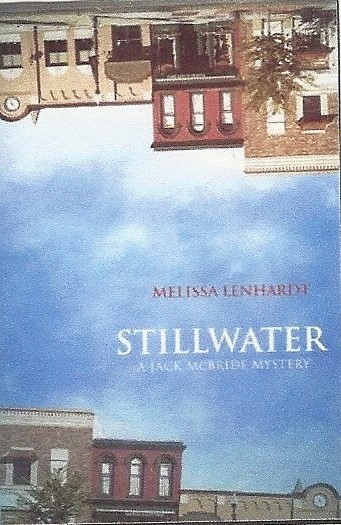
A handsome stranger appears in a small Texas town just vacated by a corrupt law enforcement official. It's the classic Western scenario, updated for the 21st century in Texas author Melissa Lenhardt's Stillwater. But unlike the horse opera versions of the story, 

hero Jack McBride can't ride a horse, dislikes getting his city slicker shoes dirty, and has no patience for cows. And he comes with a load of modern-day angst -- a wife who disappeared under mysterious circumstances, a previous job he left under a cloud, and an angry teenage son.

An ex-FBI agent, McBride seems an unlikely pick for the small town's new chief of police. He thought the job in the town of Stillwater, Texas, where crime is seldom seen or heard, would be a welcome change from big city life. But his first day on the job he walks into a gruesome murder-suicide (or is it a double murder)? And then there's a long-cold case of a missing, possibly murdered wife, that parallels his own family's situation.

Fortunately, he's got the town's savvy mayor behind him, not to mention the mayor's winsome protege, Ellie Martin. But both mayor and Martin have angst of their own to fill a wagon train. Can McBride solve Stillwater's sudden crime spree before it kills him? And can he find true love to salve a heart broken by his missing wife ?

I sometimes found the romantic elements that envelope both McBride and his son distracting, but overall Lenhardt draws a well-nuanced picture of a small town and the even that can lurk within the hearts of her cast of characters. Maybe a tad too many characters -- I found myself flipping back through pages to remember who was who. But Lendhardt is leaving enough threads to fill a sequel (The Fisher King, out this month), perhaps even a series.